


 MENU
MENU

金工研習心得發表
主題:如何用「心流理論」學好金工這門工藝
作者:鎮金工工作室_莊昌鎮
日期:2026年9月25日
連結: https://www.youtube.com/watch?v=TdcyqFWhRKw&t=6s
主題:如何用「心流理論」學好金工這門工藝
作者:鎮金工工作室_莊昌鎮
日期:2026年9月25日
連結: https://www.youtube.com/watch?v=TdcyqFWhRKw&t=6s
金工研習專題報告
從心流理論(Flow Theory)探討金工技藝之學習歷程
研習素材:《如何用「心流理論」學好金工(金銀珠寶飾品加工、金屬工藝)這門工藝》
鎮金工_莊昌鎮(2026年9月25日)
報告整理日期:2026年9月
摘要
本報告以鎮金工工作室負責人莊昌鎮所發表之研習影片《如何用「心流理論」學好金工這門工藝》為研習素材,整理並分析其核心論述。該影片將美國心理學家米哈里‧契克森米哈伊(Mihaly Csikszentmihalyi)提出之「心流理論」(Flow Theory),系統性地對應至金工(金銀珠寶飾品加工、金屬工藝)技藝之學習歷程,說明學習者如何在「挑戰難度」與「技能水平」兩軸之間動態調整,以進入專注忘我、兼具成就感與創造力的心流狀態。本報告依影片內容,依序整理心流理論之基本概念、金工學習四階段模型(A1–A4)、金工心流八種狀態模型、觸發心流之五個必要元素,以及金工達人修煉路徑,並於文末提出對金工教學實務之啟示與應用建議。
壹、前言
一、研習動機
金工(金銀珠寶飾品加工、金屬工藝)是一門結合體力操作、精細技巧與藝術審美的傳統工藝,學習者於習藝過程中,經常面臨「基礎枯燥、進階挫折」的兩難:入門階段因反覆練習簡單款式而感到乏味,進階階段則可能因挑戰複雜鑲嵌、雕刻技法而感到壓力甚至放棄。莊昌鎮老師於本影片中引入心流理論,嘗試為金工學習歷程建立一套心理狀態的診斷架構,協助學習者與教學者辨識當下所處階段,並據以調整挑戰難度或技能訓練強度,使學習得以持續、有效的推進。
二、心流理論簡介
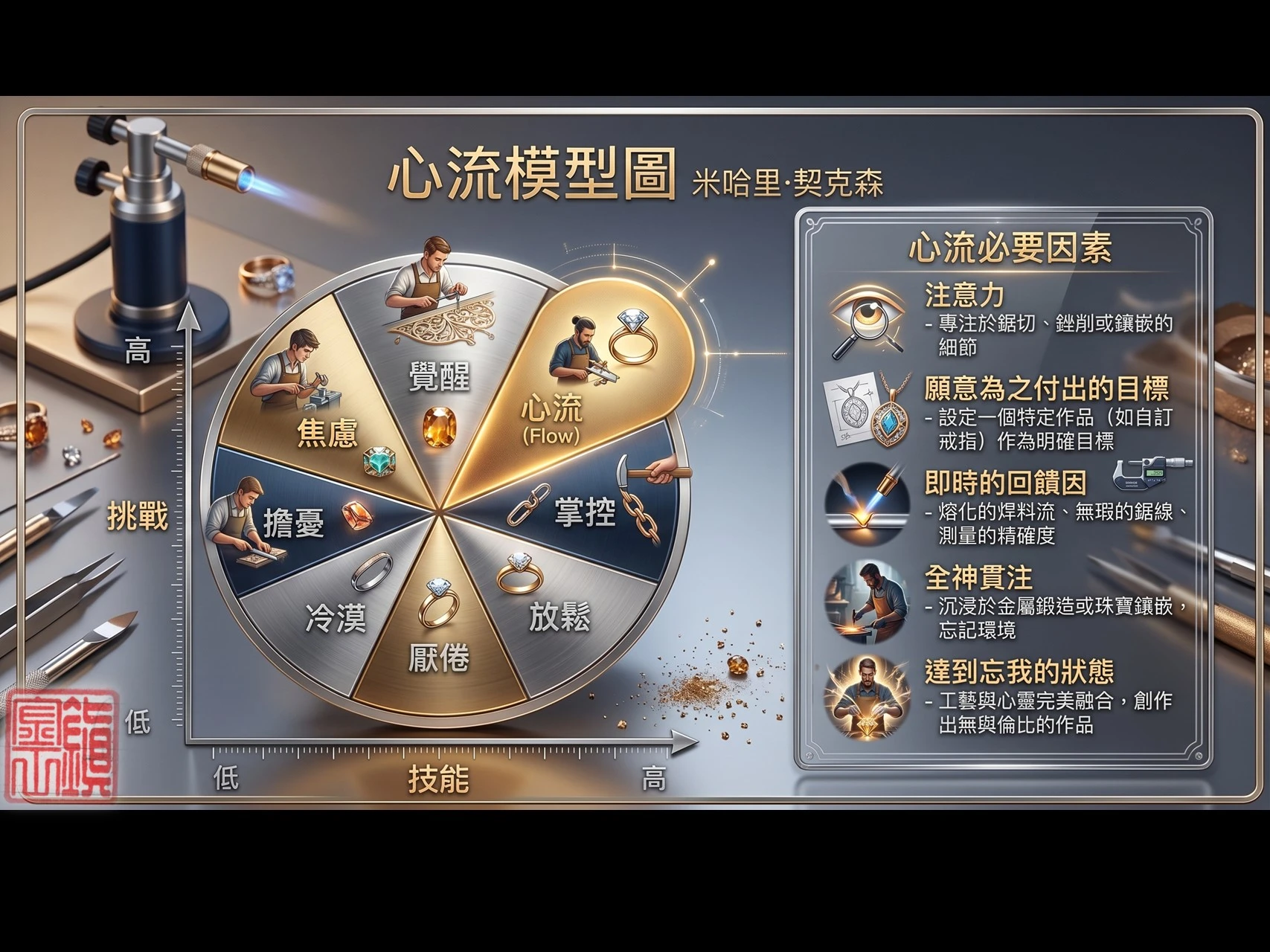
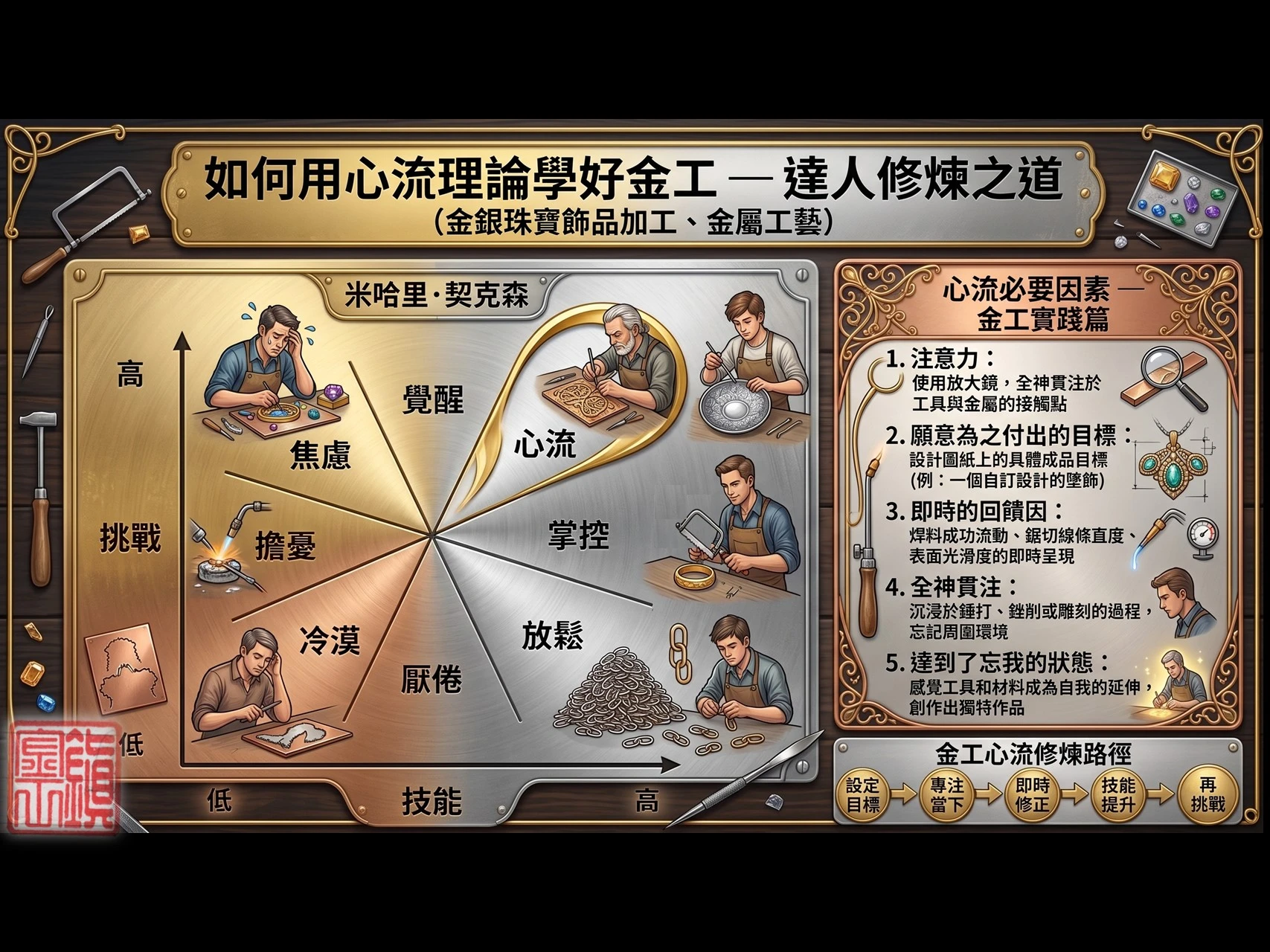
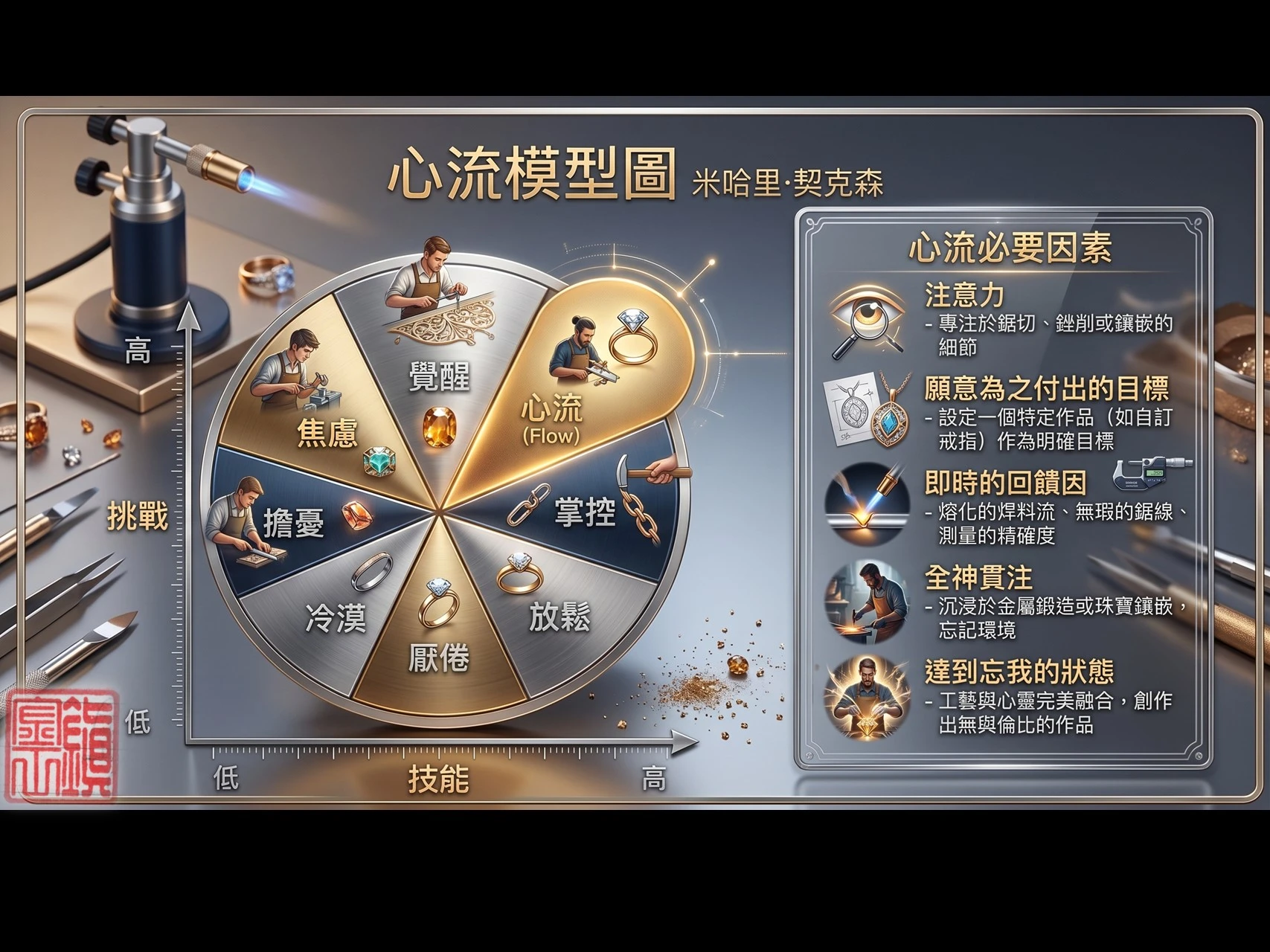
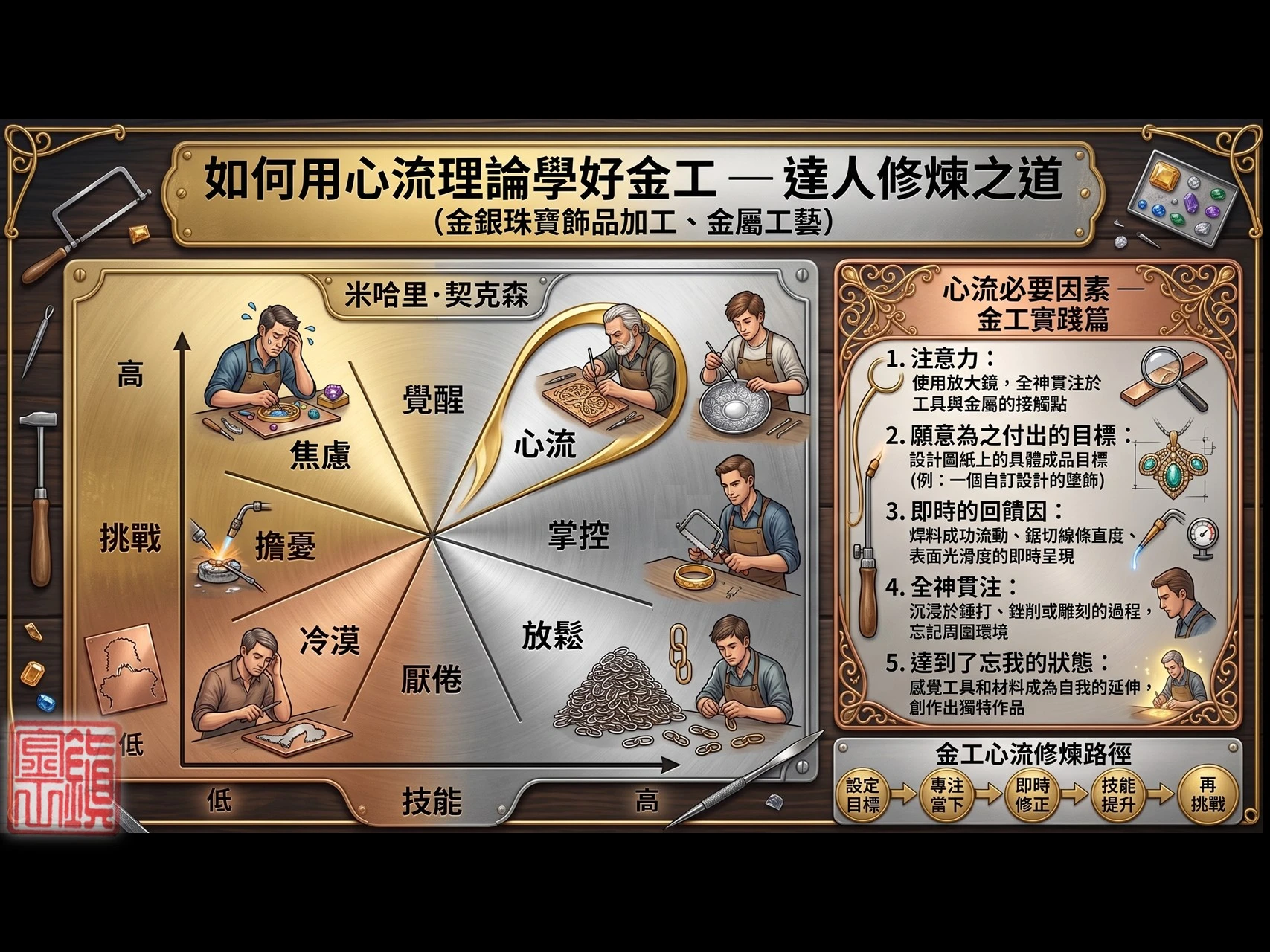
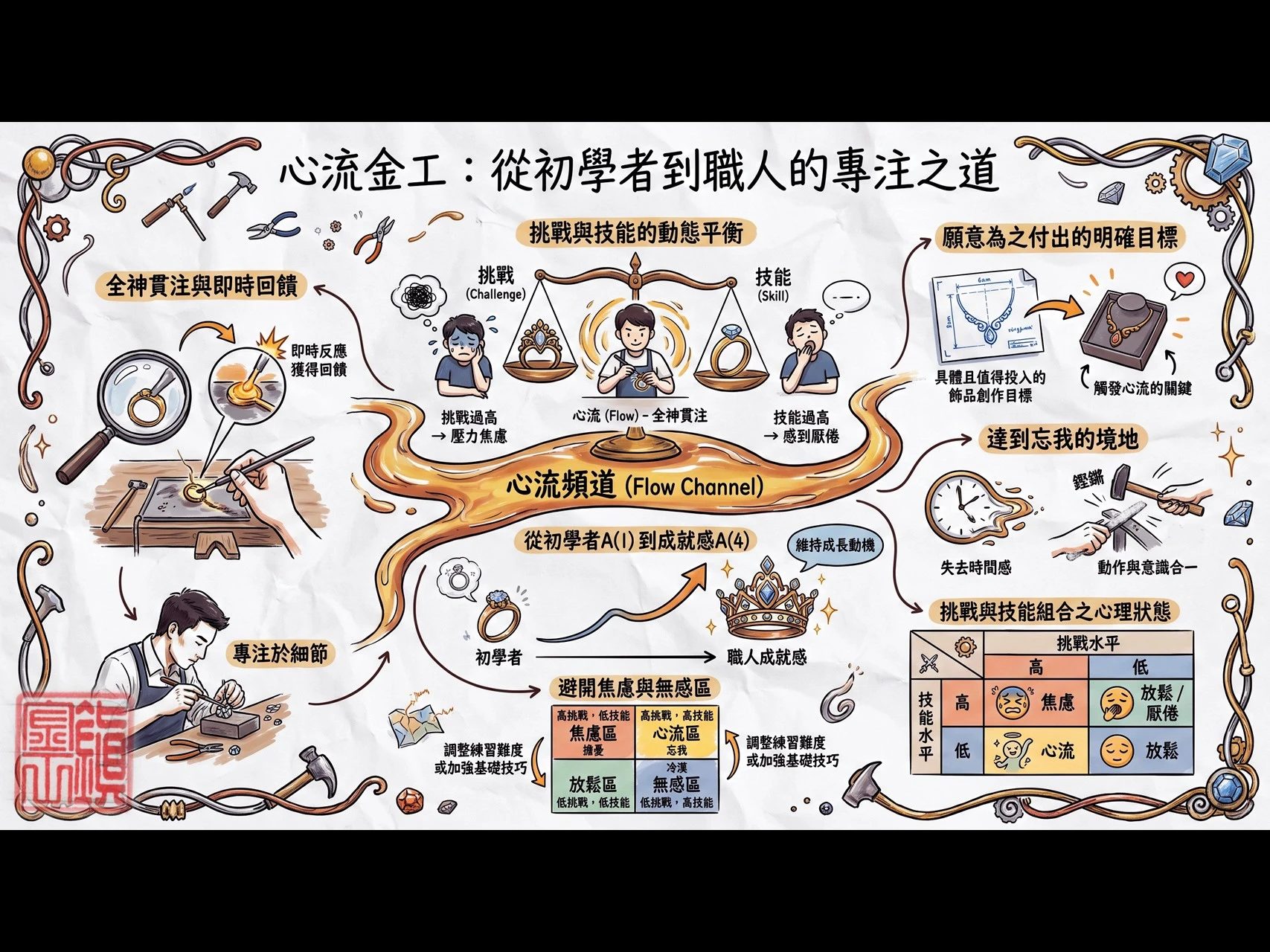
心流理論由米哈里‧契克森米哈伊提出,主張當一項活動的「挑戰難度」與個人「技能水平」達到適當且動態的平衡時,人會進入一種全神貫注、忘卻時間、物我兩忘的最佳心理狀態,稱為「心流」(Flow)。心流狀態不僅帶來高度的專注與效率,也伴隨強烈的內在滿足感與創造力展現。影片以「心流體驗圖」說明:當挑戰遠高於技能,學習者會感到焦慮;當技能遠高於挑戰,則會感到厭煩;唯有挑戰與技能同步提升,才能沿著「心流渠道」持續前進。
貳、金工學習歷程之四階段模型(A1–A4)
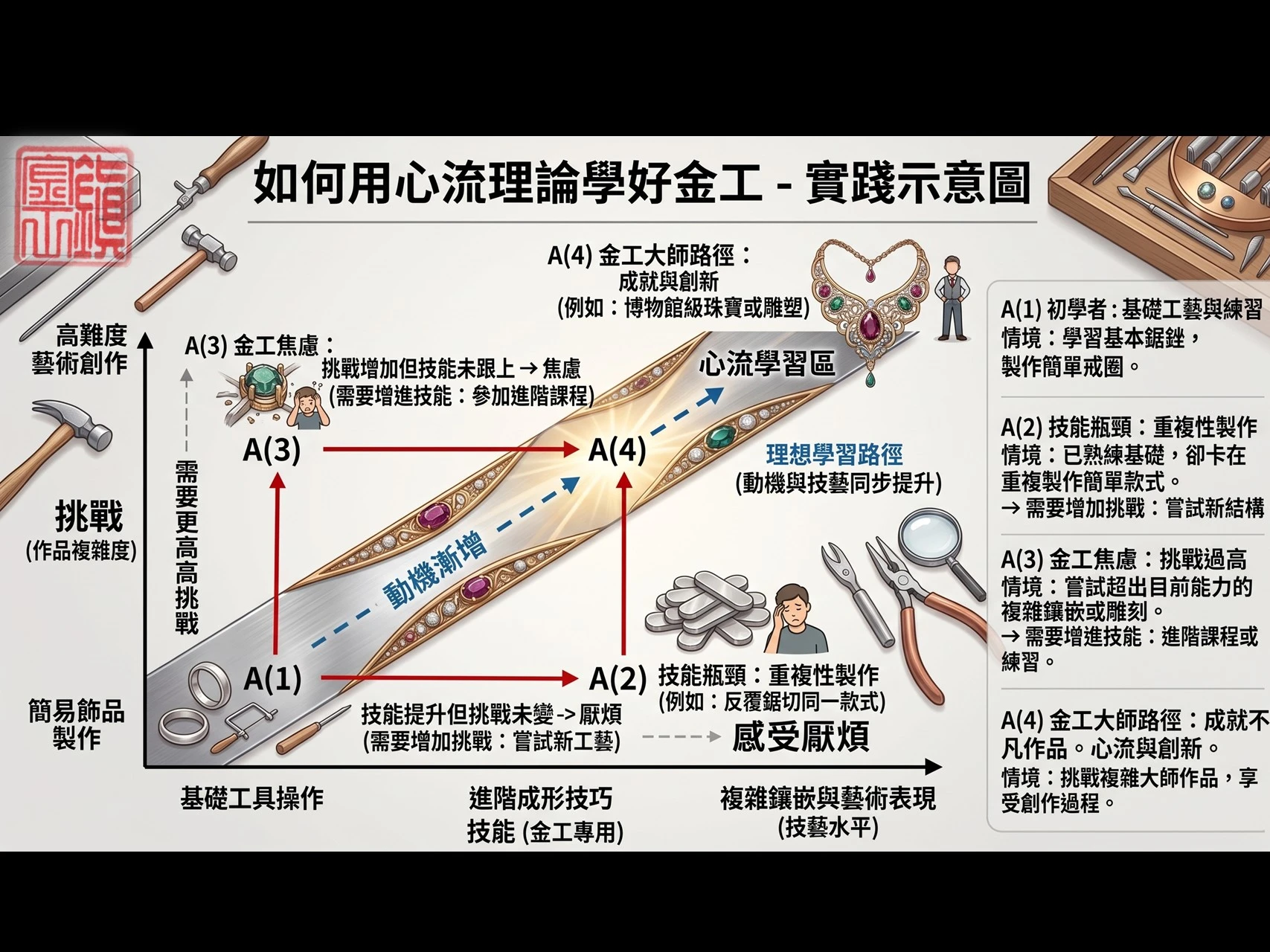
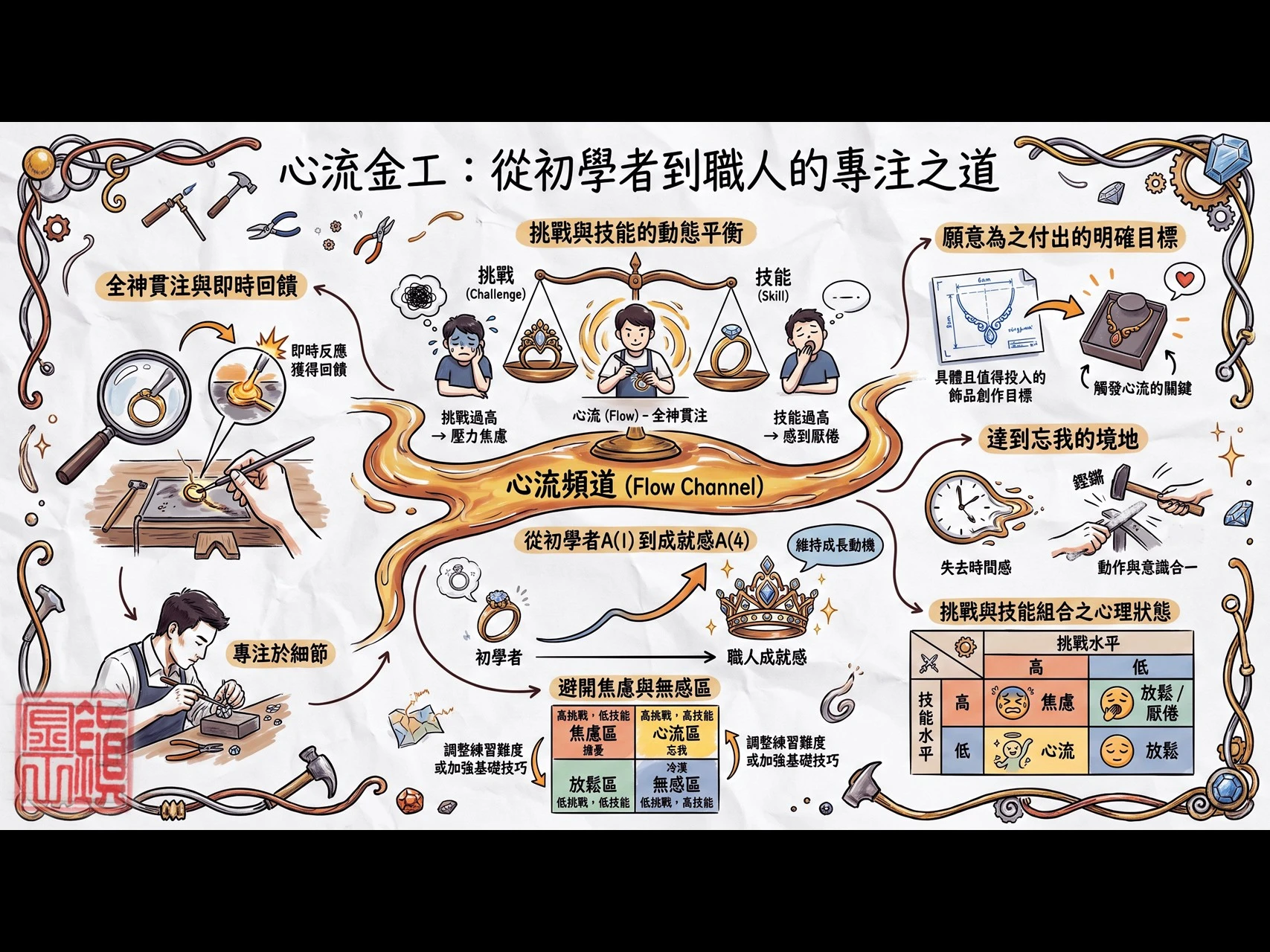
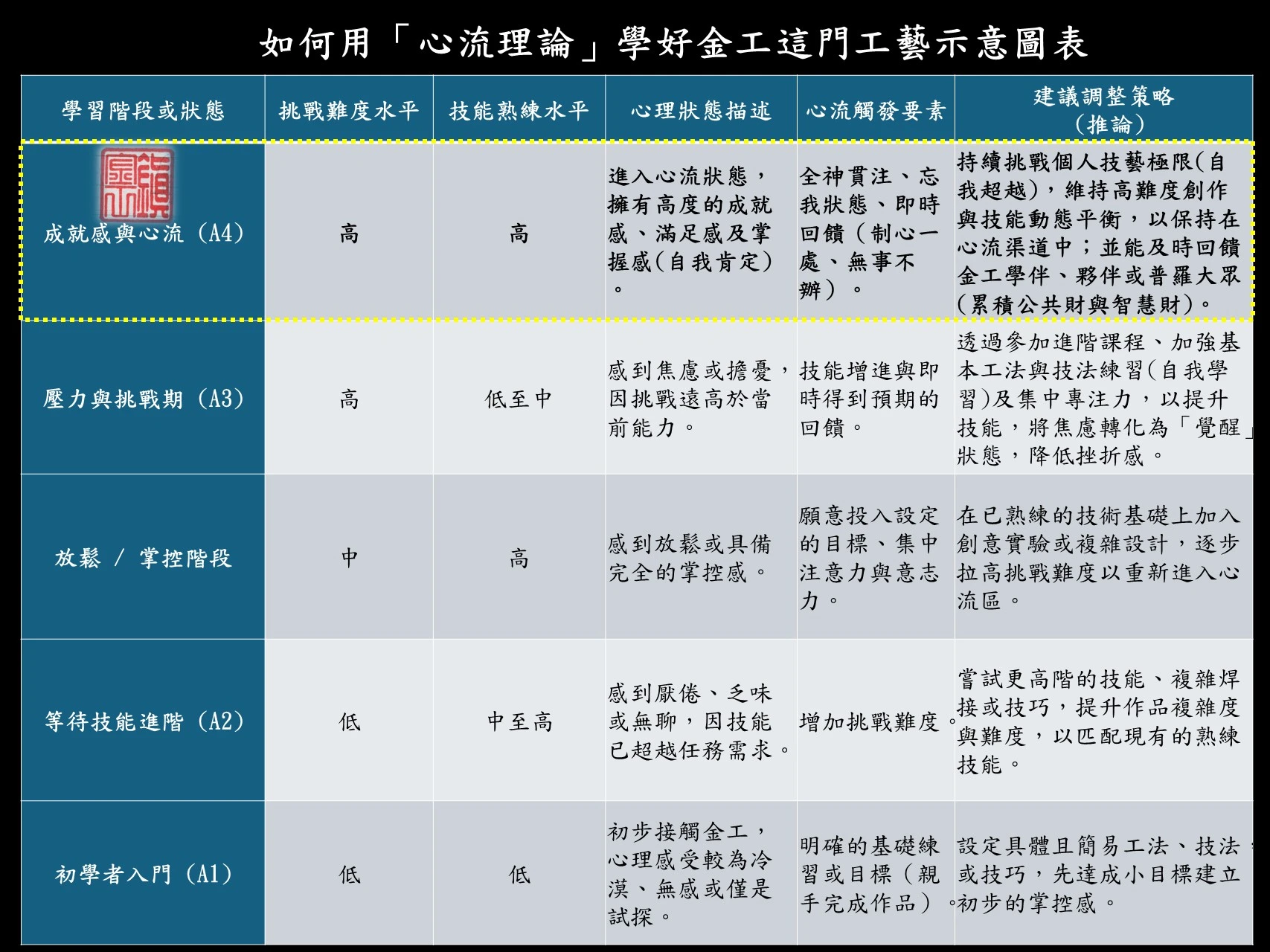
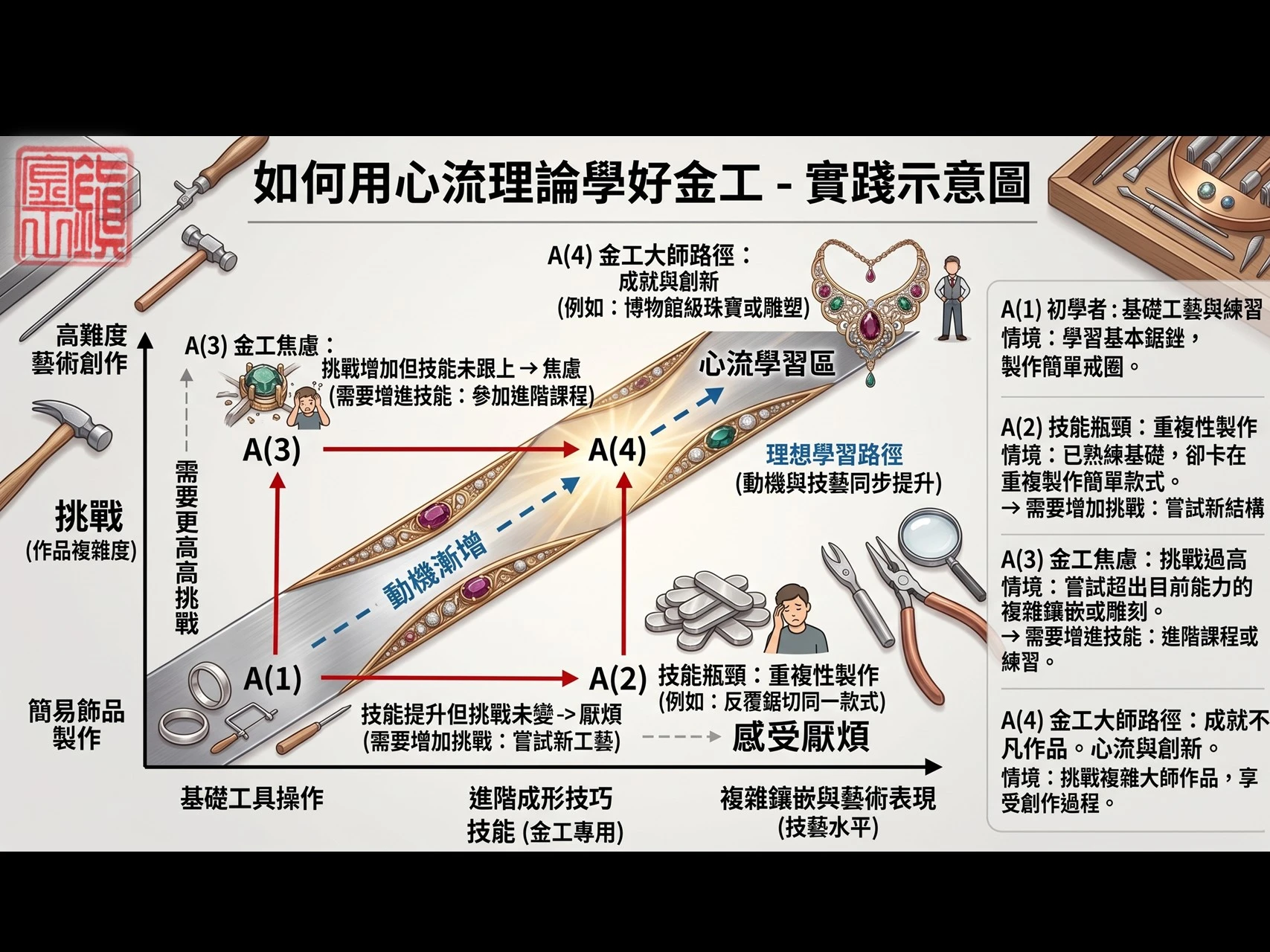
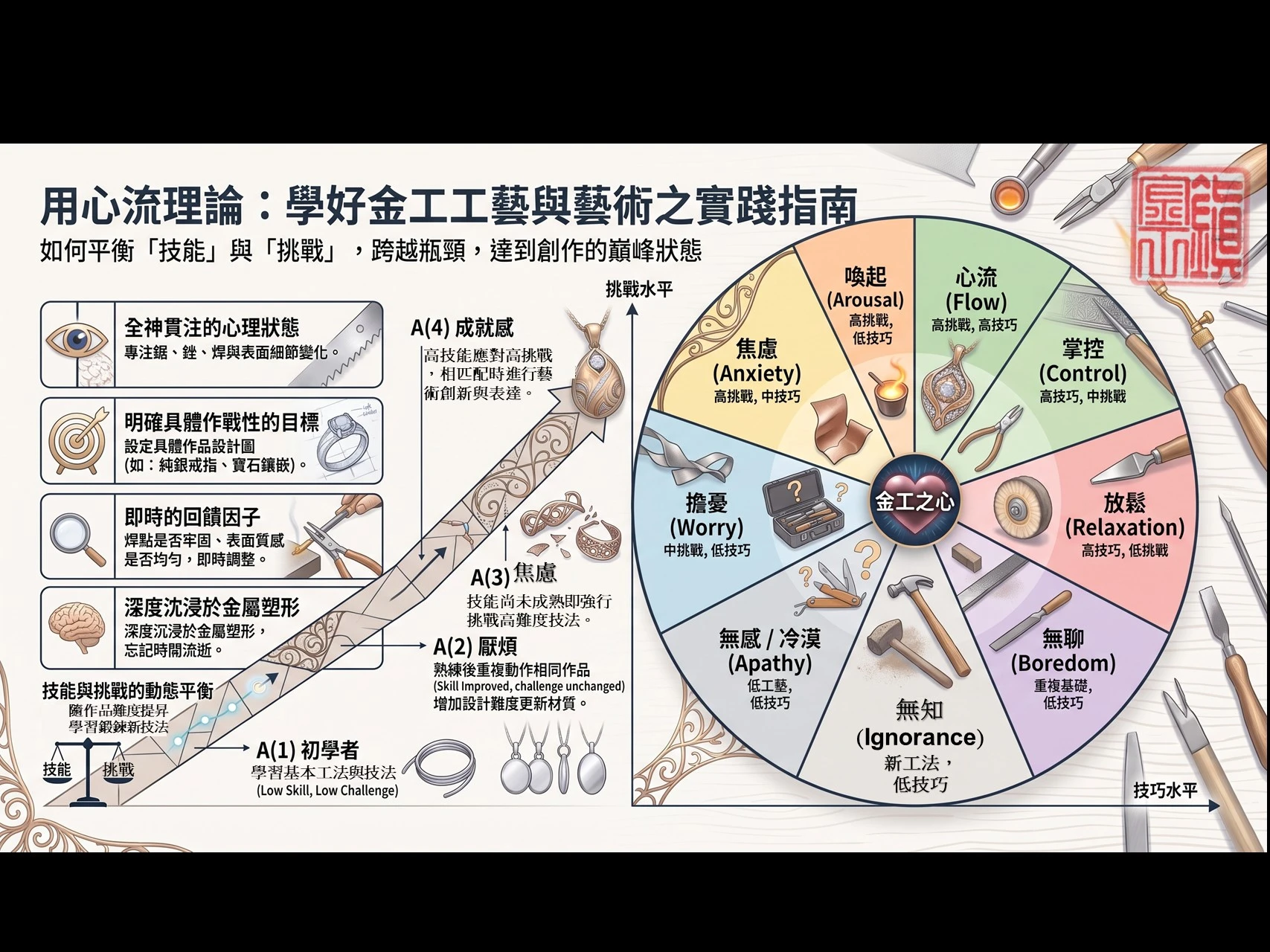
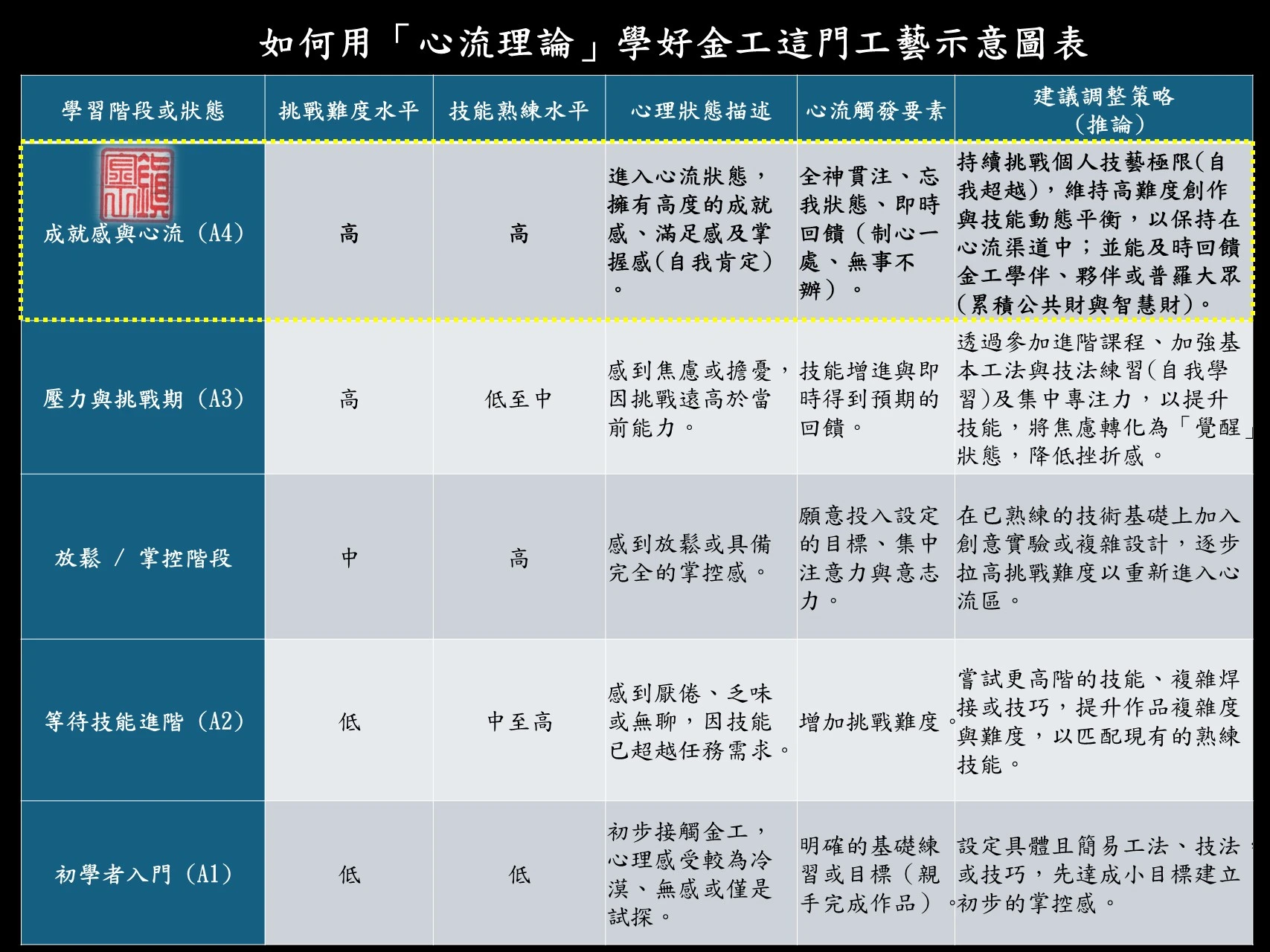
影片以「實踐示意圖」將金工學習歷程具體區分為四個階段,並分別對應學習者之心理狀態、實際情境與建議因應方式,整理如下表:
| 階段 | 心理狀態 | 金工情境舉例 | 建議調整方向 |
| A(1) 初學者 | 基礎工藝與練習 | 學習基本鋸銼,製作簡單戒圈 | 透過明確、簡易的技法目標建立初步掌控感 |
| A(2) 技能瓶頸 | 重複性製作、感受厭煩 | 已熟練基礎,卻卡在重複製作簡單款式(如反覆鋸切同一款式) | 需要增加挑戰:嘗試新結構、新工藝 |
| A(3) 金工焦慮 | 挑戰過高、感到壓力 | 嘗試超出目前能力之複雜鑲嵌或雕刻 | 需要增進技能:參加進階課程、加強練習 |
| A(4) 金工大師路徑 | 成就與創新、進入心流 | 挑戰複雜大師作品(如博物館級珠寶或雕塑),享受創作過程 | 維持技能與挑戰同步提升,持續創新與表達 |
参、金工心流八種狀態模型
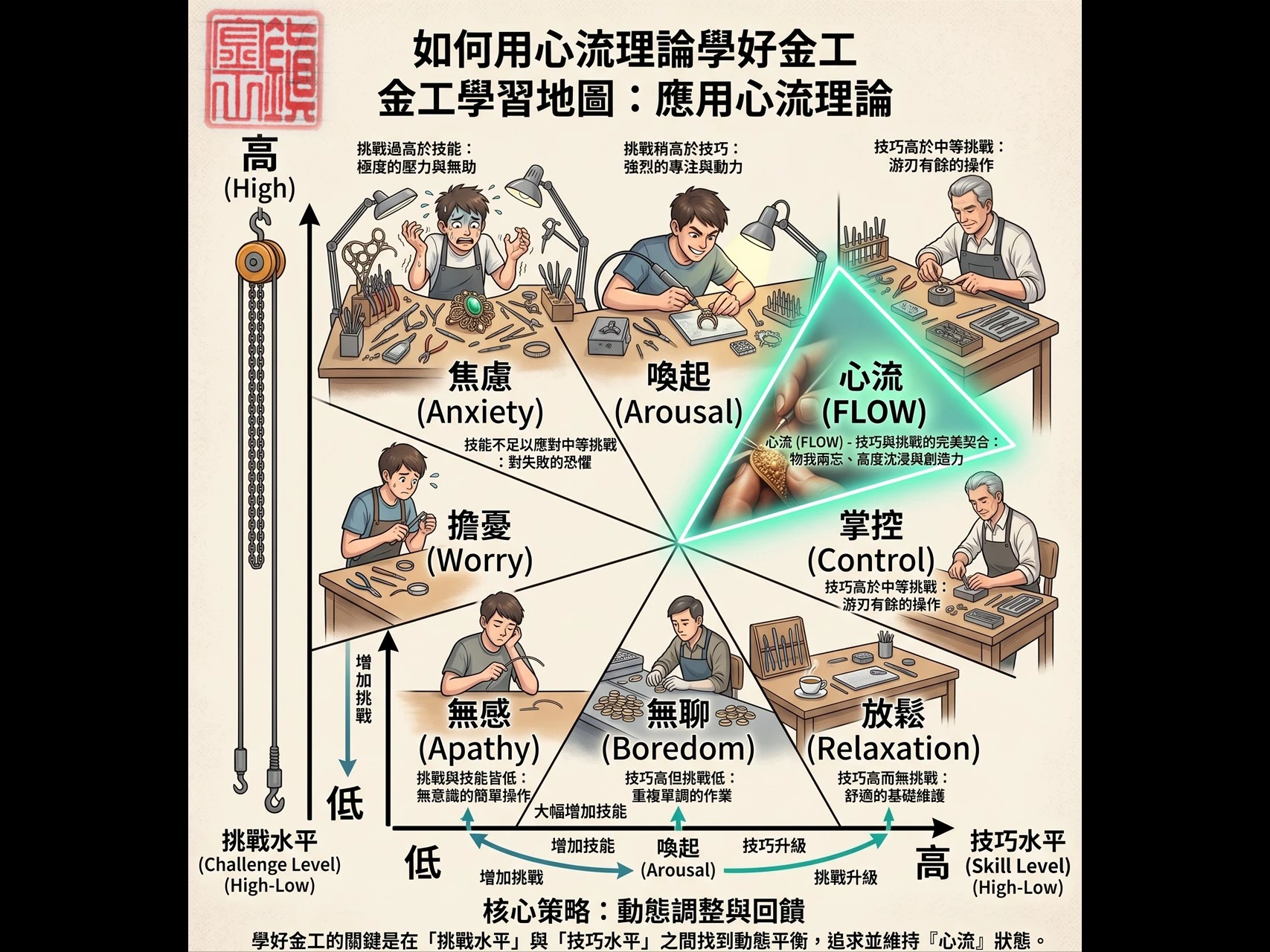
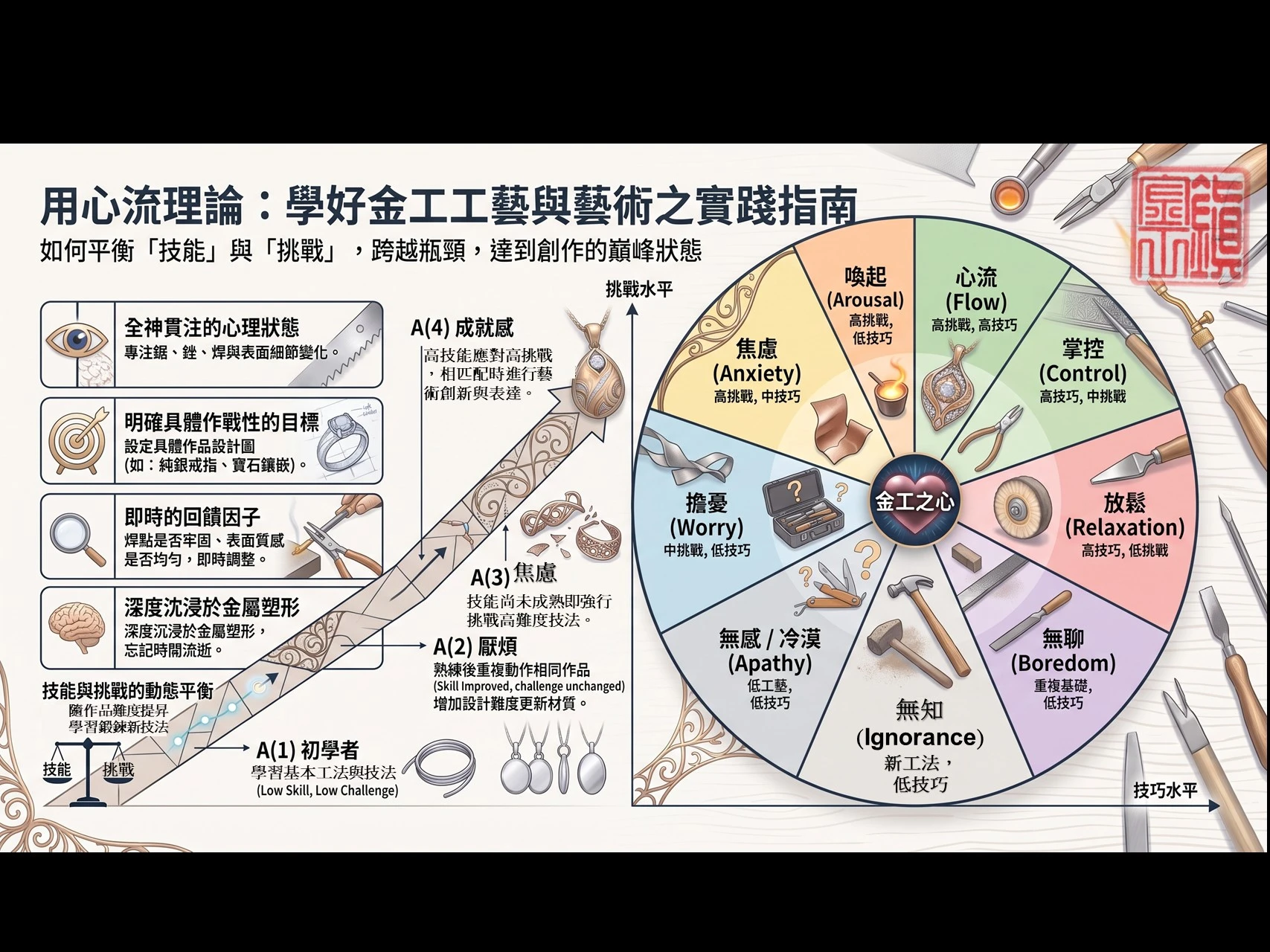
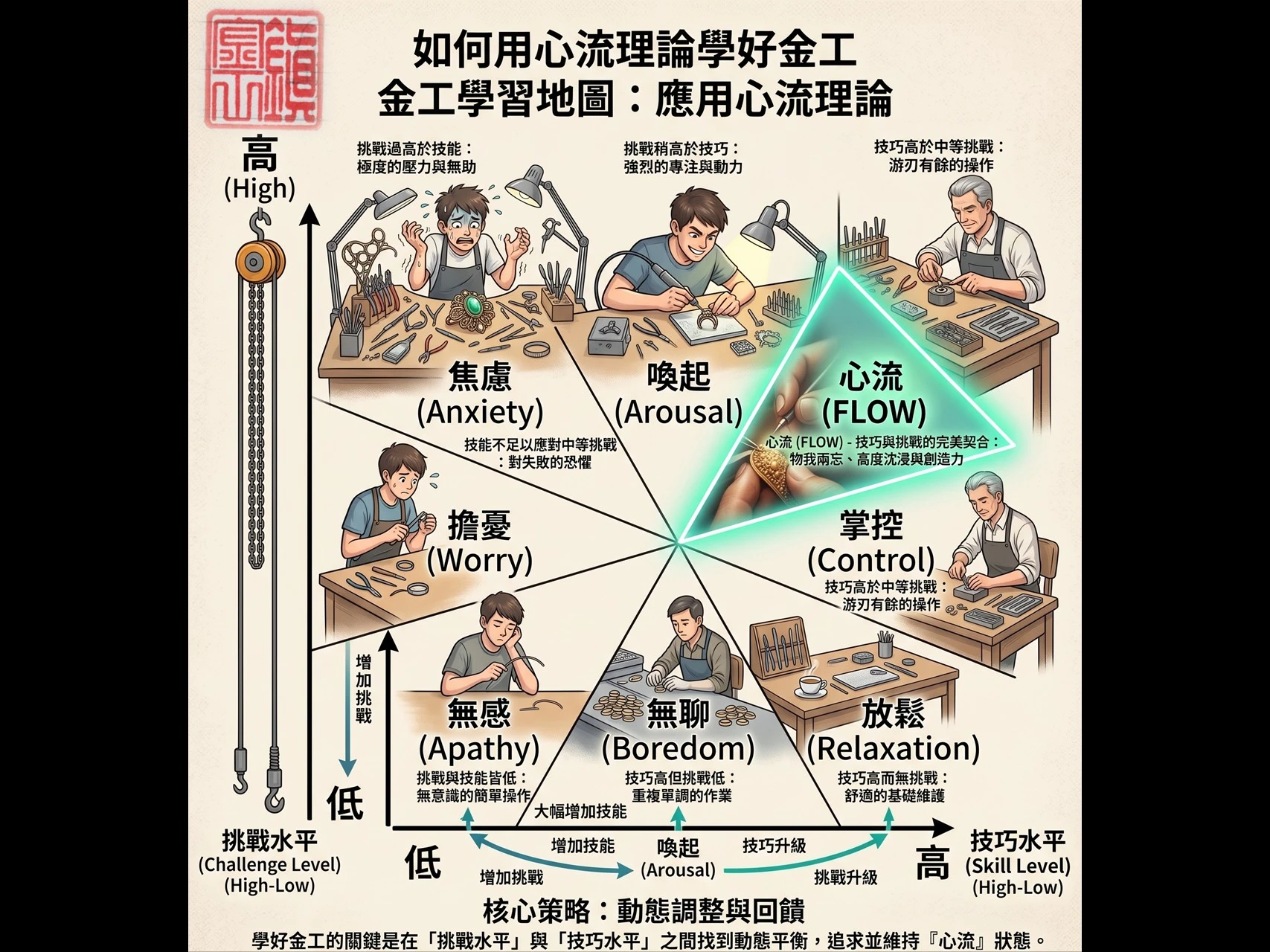
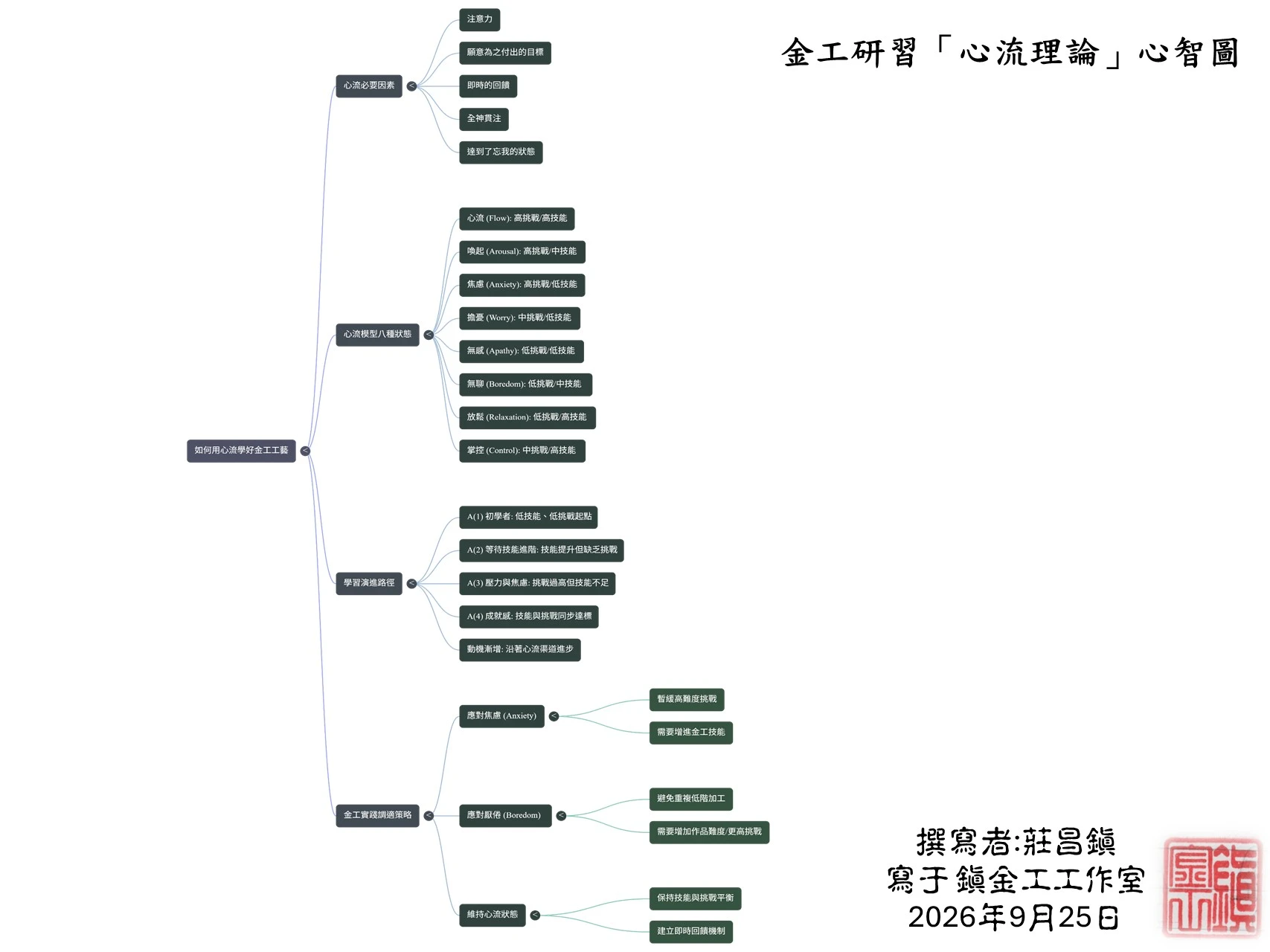
影片進一步援引心流理論中完整的「八通道模型」(Eight-Channel Model),以「挑戰水平」與「技巧水平」兩軸,劃分出八種心理狀態,並分別以金工情境具體舉例說明,整理如下:
| 狀態 | 挑戰/ 技能組合 | 金工情境 |
| 心流 (Flow) | 高挑戰、高技巧 | 技巧與挑戰完美契合,物我兩忘、高度沈浸與創造力 |
| 掌控 (Control) | 中等挑戰、高技巧 | 技巧高於中等挑戰,游刃有餘的操作 |
| 放鬆 (Relaxation) | 低挑戰、高技巧 | 技巧高而無挑戰,舒適的基礎維護工作 |
| 無聊 (Boredom) | 低挑戰、中等技巧 | 技巧高但挑戰低,重複單調的作業 |
| 無感/冷漠 (Apathy) | 低挑戰、低技巧 | 挑戰與技能皆低,無意識的簡單操作 |
| 擔憂 (Worry) | 中等挑戰、低技巧 | 技能不足以應對中等挑戰,對失敗的恐懼 |
| 焦慮 (Anxiety) | 高挑戰、低技巧 | 挑戰過高於技能,極度的壓力與無助 |
| 喚起 (Arousal) | 高挑戰、中等技巧 | 挑戰稍高於技巧,強烈的專注與動力 |
此一模型之核心策略在於「動態調整與回饋」:學好金工的關鍵,是在挑戰水平與技巧水平之間找到動態平衡,並持續朝右上角的心流象限移動。若學習者處於無聊或放鬆象限,應主動增加挑戰(如嘗試新結構、新材質);若處於焦慮或擔憂象限,則應優先增進技能(如加強基礎練習、參與進階課程),再逐步拉高挑戰。
肆、觸發金工心流的五個必要元素
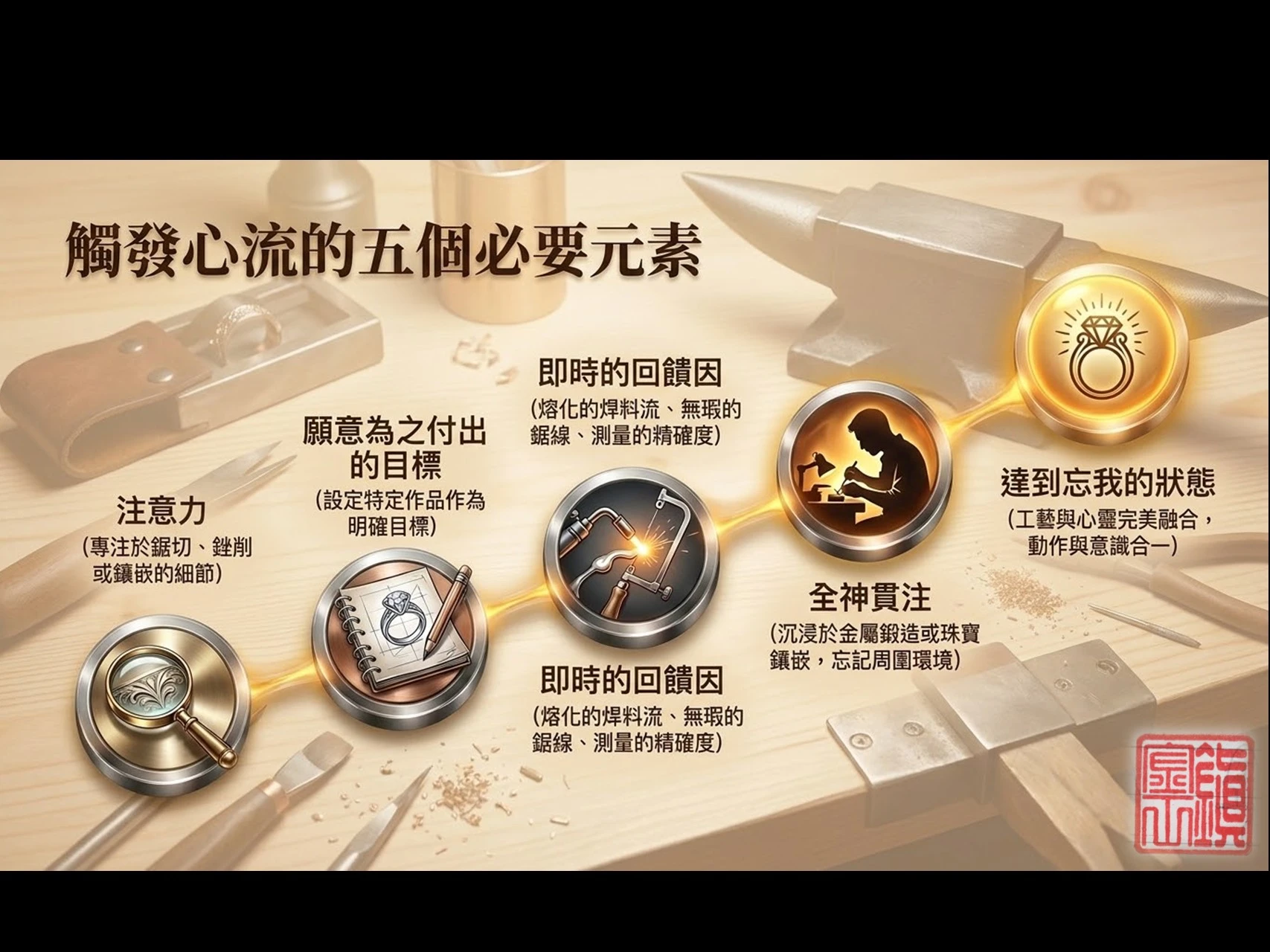
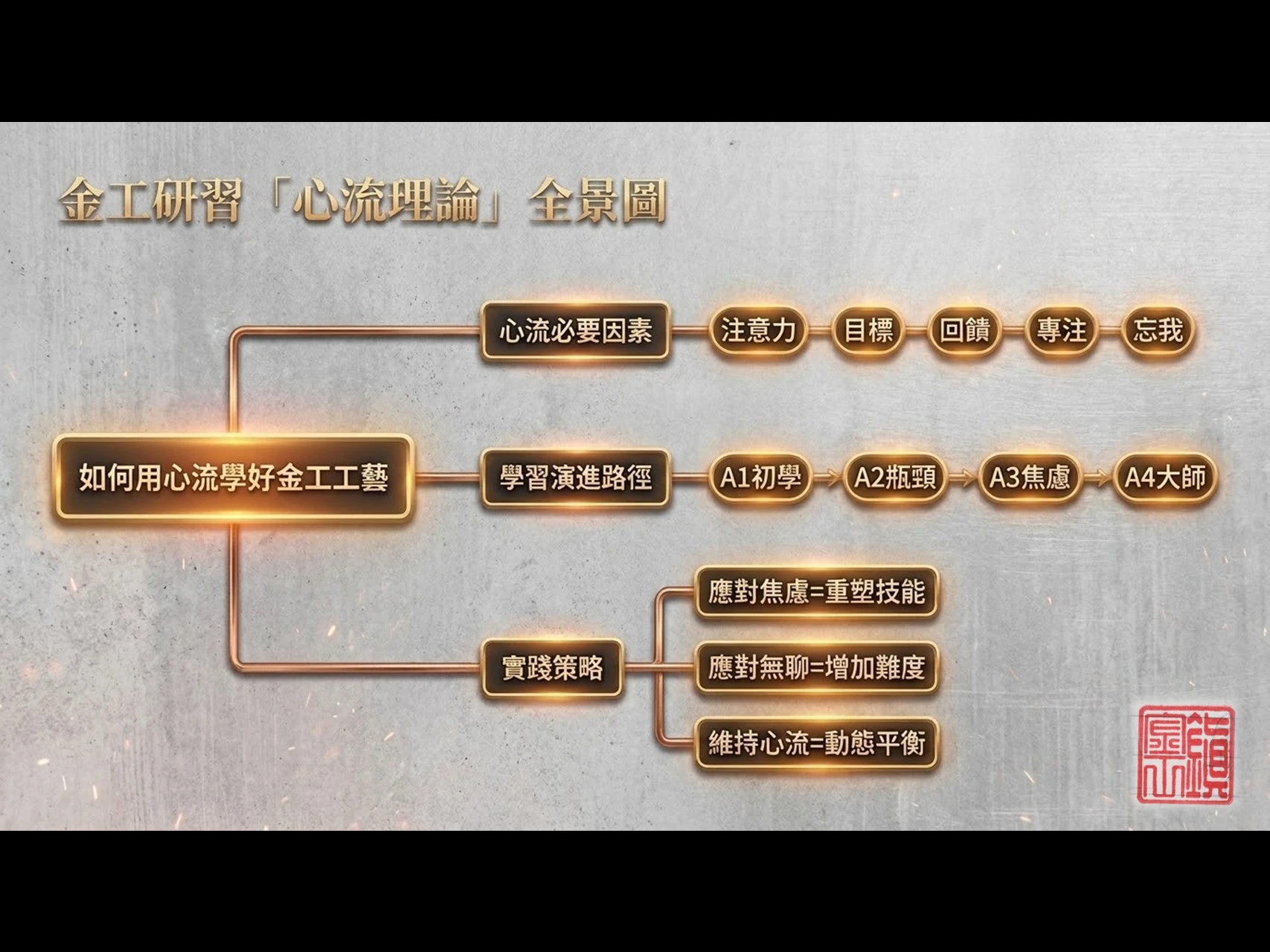
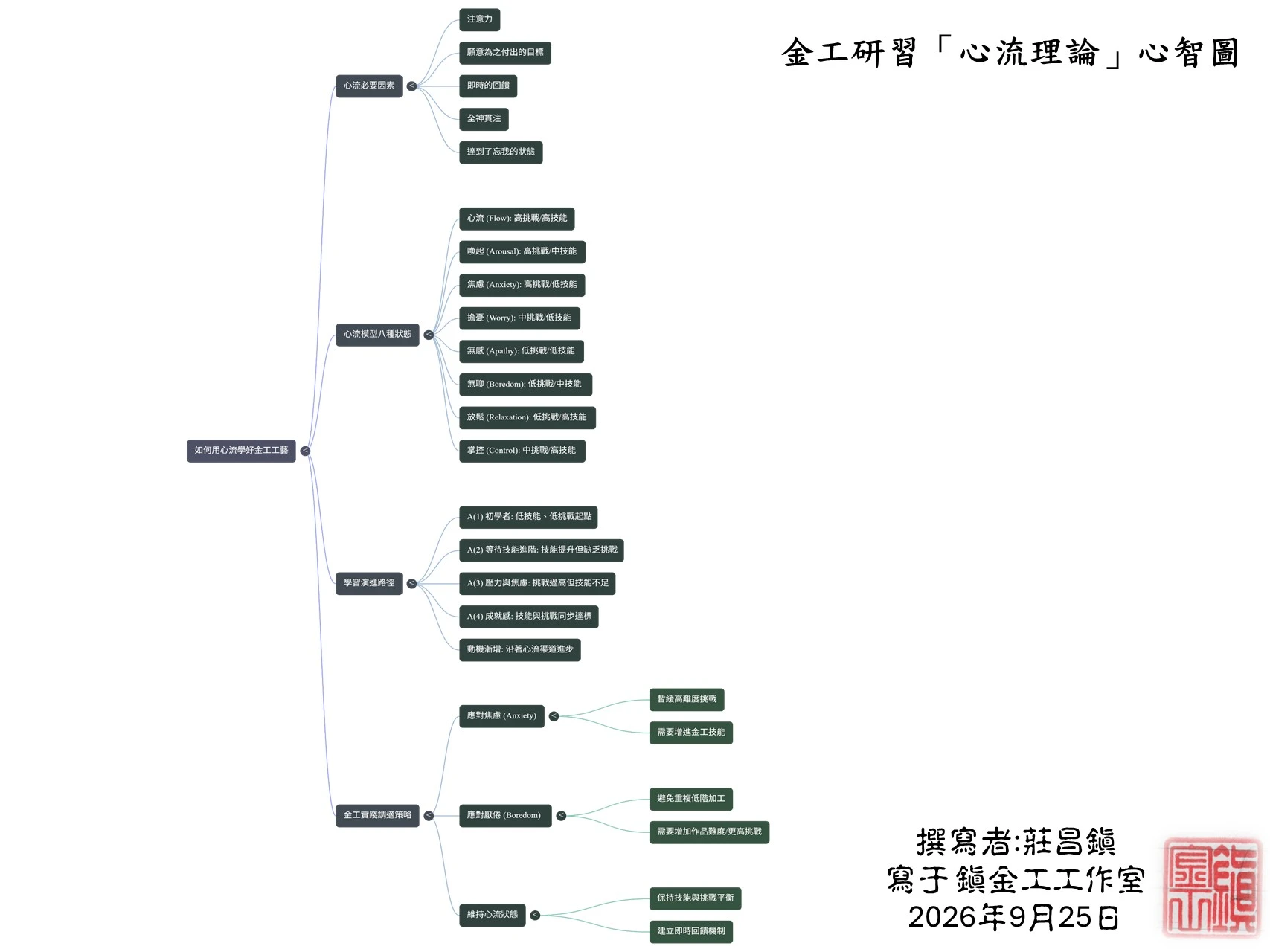
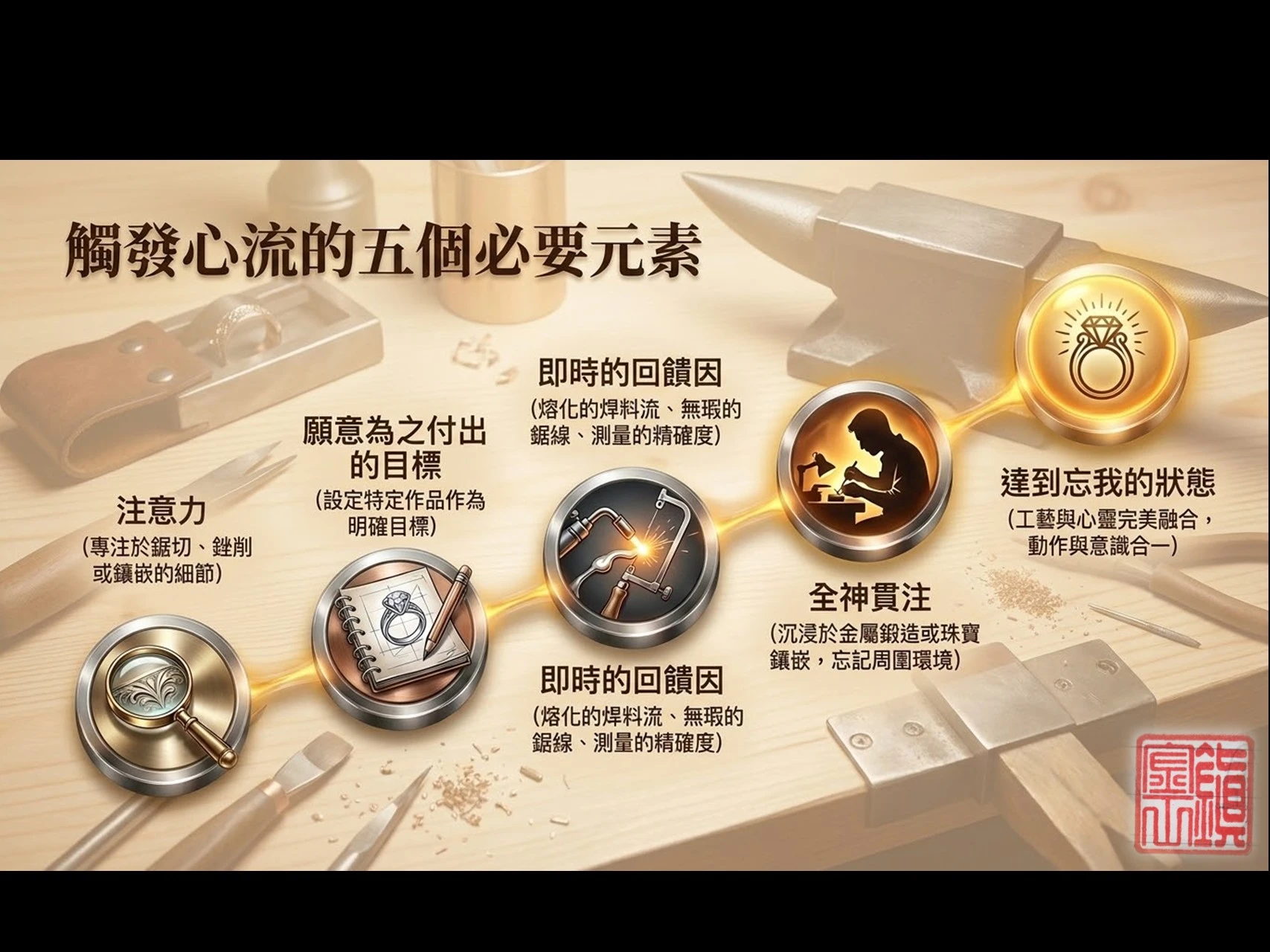
影片歸納出觸發心流狀態的五個必要元素,並以金工實踐情境具體詮釋:
1.注意力:專注於鋸切、銼削或鑲嵌等細節,使用放大鏡等工具強化對工具與金屬接觸點的全神貫注。
2.願意為之付出的目標:設定具體、明確的作品設計圖,例如一件訂製設計的墜飾,作為努力的具體方向。
3.即時的回饋因子:焊料是否成功流動、鋸切線條是否直度、表面光滑度等,提供即時且可辨識的操作結果回饋。
4.全神貫注:沉浸於金屬鍛造、鎚打、銼削或雕刻之過程,忘記周圍環境與時間流逝。
5.達到忘我的狀態:感覺工具與材料成為自我的延伸,工藝與心靈完美融合,動作與意識合一,並創作出獨特作品。
上述五個元素環環相扣:唯有具備明確目標與即時回饋,學習者才能將注意力持續投注於操作細節,進而達到全神貫注、忘我之心流狀態。此一架構亦可作為金工教學課程設計之檢核指標;每一堂課或每一階段練習,是否都具備明確目標、可即時察覺的回饋機制,將直接影響學員能否進入專注學習狀態。
伍、金工達人修煉之道與心流循環路徑
影片以「金工心流修煉路徑」總結整體學習策略,將心流觸發元素進一步轉化為可持續操作的循環步驟:「設定目標→專注當下→即時修正→技能提升→再挑戰」,形成一個週而復始、不斷向上提升的螺旋式學習循環。此一路徑之核心精神在於:學習不應停留於單一難度層級,而應在達成階段性目標、累積技能後,主動尋求下一輪更高難度的挑戰,如此才能持續維持在心流渠道之中,而非退回無聊或滑入焦慮。影片並提供一份綜合性示意圖表,將學習階段(A1–A4)、挑戰難度水平、技能熟練水平、心理狀態描述、心流觸發要素與建議調整策略整合於單一表格中,作為學習者或教學者快速自我診斷之工具。例如,處於「等待技能進階(A2)」階段者,其心理狀態多為「感到厭倦、乏味或無聊,因技能已超越任務需求」,建議調整策略為「嘗試更高階的技能、複雜焊接或技巧,提升作品複雜度與難度,以匹配現有的熟練技能」;而處於「壓力與挑戰期(A3)」者,則建議「透過參加進階課程、加強基本工法與技法練習,以提升技能,將焦慮轉化為覺醒狀態」。
陸、學習啟示與應用建議
綜合上述分析,本研習素材對金工學習者與教學者皆具有實務參考價值,具體啟示如下:
1.對學習者而言:應定期自我檢視所處之學習階段(可對照A1–A4模型或八種狀態模型),當察覺自己陷入重複、厭煩之無聊狀態時,應主動尋求新工藝、新結構之挑戰;當察覺焦慮、挫折感升高時,則應暫緩挑戰難度,回頭加強基礎技法練習,而非勉強挑戰超出能力範圍之作品。
2.對教學者而言:課程設計應避免長時間停留於單一難度層級,宜採取分級、漸進之課程架構(如入門班、進階班、證照輔導班),並在每一階段提供明確目標與即時回饋機制(如即時糾正焊接、鋸切技巧),以協助學員維持在心流渠道中學習。
3.對課程規劃而言:可將心流理論之五個必要元素,轉化為教學現場的具體作法,例如提供放大鏡等輔助工具強化專注、要求學員設定具體訂製作品目標、於操作過程中給予即時技術示範與修正,藉此提升學員之學習沉浸感與持續學習動機。
4.對個人技藝修煉而言:可參考「設定目標→專注當下→即時修正→技能提升→再挑戰」之循環路徑,將其作為長期自主練習之框架,避免技藝停滯於舒適圈,亦避免因躁進而長期處於焦慮狀態。
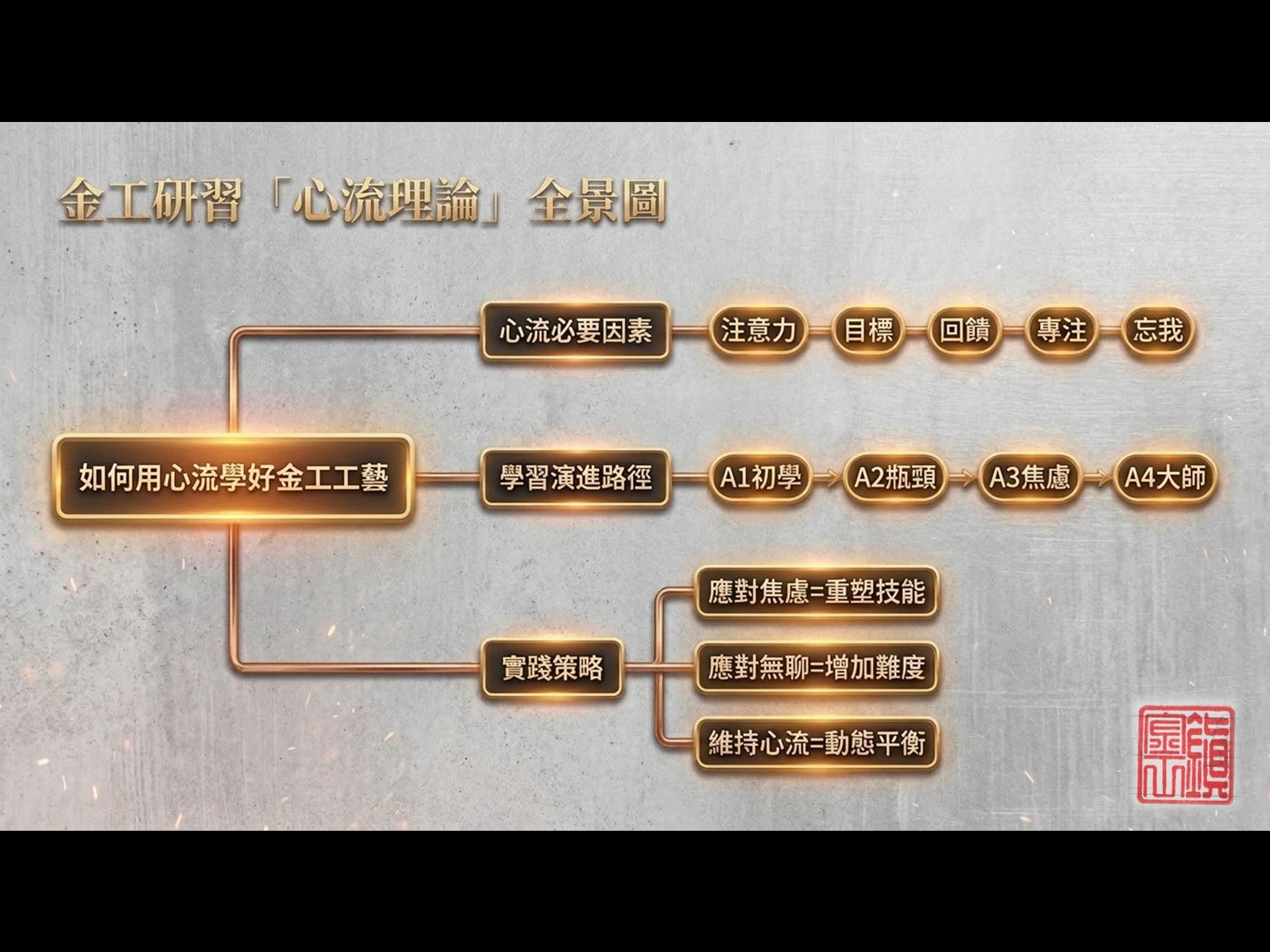
柒、結論本研習報告整理自莊昌鎮老師《如何用「心流理論」學好金工這門工藝》研習影片之核心內容,說明心流理論如何被系統性地應用於金工技藝之學習歷程分析。透過四階段學習模型、八種心理狀態模型、五個心流觸發要素,以及「設定目標→專注當下→即時修正→技能提升→再挑戰」之修煉路徑,學習者得以建立一套自我覺察與調整的心理架構,教學者亦可據此設計更具層次感、更能維持學員學習動機的課程體系。整體而言,心流理論為金工技藝學習提供了一個兼顧心理歷程與技術養成的整合性觀點,值得金工學習者與教學工作室經營者深入參考並應用於實際教學規劃之中。
參考資料:
1.莊昌鎮(鎮金工)。《如何用「心流理論」學好金工(金銀珠寶飾品加工、金屬工藝)這門工藝》研習影片,2026年9月25日發表。
2.Csikszentmihalyi, M. (1990). Flow: The Psychology of Optimal Experience.New York: Harper & Row.
3.電子書連結:https://www.researchgate.net/publication/224927532_Flow_The_Psychology_of_Optimal_Experience
主題:如何用心流理論學好金工這門工藝
心流理論探討了如何在學習金工時達到最佳狀態。透過三個核心圖表,了解挑戰與技能的平衡至關重要。當技能低於挑戰時,會感到焦慮;而技能高於挑戰則可能感到無聊。要進入心流狀態,需微調挑戰與技能,並尋找適當的目標、即時回饋和全神貫注。這不僅適用於金工,還能應用於日常生活,幫助人們找到更大的挑戰,打破無感與冷漠的狀態。
視頻摘要:
00:01 本次探討聚焦於如何運用心流理論來學習金工技藝,並探討大腦如何在面對高挑戰的情況下進入專注狀態。理解這一過程對於提升技藝和創造力都至關重要。
-心流體驗圖展示了挑戰與技能的關係,這是學習過程中的關鍵。當挑戰與技能相匹配時,學習者才能達到最佳狀態,進而進入心流的境界。
-初學者在面對低挑戰時,能夠有效地進行技能學習。這種學習的蜜月期對於提升自信與動力具有重要意義,並為未來的進階挑戰打下基礎。
-當技能進步但挑戰沒有跟上時,學習者會感到無聊,這對學習動機造成負面影響。這種情況下,大腦會因為缺乏挑戰而失去專注力,影響學習效果。
02:20 大腦渴望節省能量,當動作自動化後,會導致心理狀態偏離心流,產生厭煩感。為了重回心流,我們需要尋找稍微超出目前能力的挑戰來微調挑戰與技能的比例。
-無聊讓大腦關機,而焦慮則會讓身體失控。當任務難度超過技能時,焦慮會影響表現,導致手抖、出汗和肌肉緊繃等問題,這在金工作業中尤其致命。
-要達到最大的成就感,挑戰與技能必須同步提升。心流是一個動態平衡的狀態,需要不斷微調挑戰和技能的比例,以保持在最佳表現的狀態。
-心理狀態不是非黑即白,還有其他狀態的存在。透過更詳細的心流模型圖,可以分辨出八種不同的心理狀態,幫助我們理解如何在挑戰和技能之間找到最佳平衡。
04:37 掌控和放鬆的狀態在學習和工作中具有重要價值,但如果一直停留在這些舒適圈,將無法獲得成就感和進步。因此,適度提高挑戰是通往心流的重要途徑。
-在技能與挑戰的平衡中,當技能低而挑戰也低時,可能會導致冷漠和無感,這對學習過程是非常不利的。這種狀態會讓大腦感到無價值和無威脅。
-當面臨高挑戰而技能又不足時,會產生焦慮感,這對心理健康和學習效能都有消極影響。了解這些狀態能幫助我們調整心態,找到合適的挑戰水平。
-在工作中,雖然放鬆和掌控的狀態是必要的,但若長期停留在這些狀態,就無法獲得更高的成就感。突破自己的極限,適度提升挑戰,才能促進成長與進步。
07:00 在覺醒狀態下,雖然會感到不適,但神經系統會變得高度敏銳。透過練習提升技能,我們可以進入心流狀態,這是一種建設性的心理成長過程。
-心流的五個必要因素包括注意力、明確的目標、即時的回饋、全神貫注以及忘我狀態。這些要素環環相扣,共同促進我們進入心流的過程。
-明確的目標能夠引導我們的注意力,讓我們專注於當前任務。具體的目標,例如精確調整金屬工藝,能使我們更容易投入心流狀態。
-即時的回饋在金屬工藝中尤為重要,因為它能迅速告訴我們操作的正確性。這種物理性回饋可以幫助我們保持全神貫注,進一步加強心流的體驗。
09:14 在學習過程中,專注和心流狀態是至關重要的,這能夠讓學習者進入一種忘我的境界,完全沉浸於當下的活動中。透過精密的心理調整,挑戰與技能的比例必須不斷微調,以便達到最佳狀態。
-達到心流狀態時,學習者能夠完全屏蔽外界的干擾,專注於當前的任務。這種狀態不僅提升了效率,還能帶來更深層次的滿足感和成就感。
-要持續保持在心流狀態,學習者需要不斷調整面臨的挑戰與自身技能的匹配程度。這樣的微調有助於穩定心流的流動,讓學習變得更加自然和愉悅。
-生活中的挑戰可能會使人感到疲憊無聊,因此找尋更大的挑戰會是解決之道。這不僅能打破無感與冷漠的狀態,還能喚醒內心的熱情和動力。
心流理論探討了如何在學習金工時達到最佳狀態。透過三個核心圖表,了解挑戰與技能的平衡至關重要。當技能低於挑戰時,會感到焦慮;而技能高於挑戰則可能感到無聊。要進入心流狀態,需微調挑戰與技能,並尋找適當的目標、即時回饋和全神貫注。這不僅適用於金工,還能應用於日常生活,幫助人們找到更大的挑戰,打破無感與冷漠的狀態。
視頻摘要:
00:01 本次探討聚焦於如何運用心流理論來學習金工技藝,並探討大腦如何在面對高挑戰的情況下進入專注狀態。理解這一過程對於提升技藝和創造力都至關重要。
-心流體驗圖展示了挑戰與技能的關係,這是學習過程中的關鍵。當挑戰與技能相匹配時,學習者才能達到最佳狀態,進而進入心流的境界。
-初學者在面對低挑戰時,能夠有效地進行技能學習。這種學習的蜜月期對於提升自信與動力具有重要意義,並為未來的進階挑戰打下基礎。
-當技能進步但挑戰沒有跟上時,學習者會感到無聊,這對學習動機造成負面影響。這種情況下,大腦會因為缺乏挑戰而失去專注力,影響學習效果。
02:20 大腦渴望節省能量,當動作自動化後,會導致心理狀態偏離心流,產生厭煩感。為了重回心流,我們需要尋找稍微超出目前能力的挑戰來微調挑戰與技能的比例。
-無聊讓大腦關機,而焦慮則會讓身體失控。當任務難度超過技能時,焦慮會影響表現,導致手抖、出汗和肌肉緊繃等問題,這在金工作業中尤其致命。
-要達到最大的成就感,挑戰與技能必須同步提升。心流是一個動態平衡的狀態,需要不斷微調挑戰和技能的比例,以保持在最佳表現的狀態。
-心理狀態不是非黑即白,還有其他狀態的存在。透過更詳細的心流模型圖,可以分辨出八種不同的心理狀態,幫助我們理解如何在挑戰和技能之間找到最佳平衡。
04:37 掌控和放鬆的狀態在學習和工作中具有重要價值,但如果一直停留在這些舒適圈,將無法獲得成就感和進步。因此,適度提高挑戰是通往心流的重要途徑。
-在技能與挑戰的平衡中,當技能低而挑戰也低時,可能會導致冷漠和無感,這對學習過程是非常不利的。這種狀態會讓大腦感到無價值和無威脅。
-當面臨高挑戰而技能又不足時,會產生焦慮感,這對心理健康和學習效能都有消極影響。了解這些狀態能幫助我們調整心態,找到合適的挑戰水平。
-在工作中,雖然放鬆和掌控的狀態是必要的,但若長期停留在這些狀態,就無法獲得更高的成就感。突破自己的極限,適度提升挑戰,才能促進成長與進步。
07:00 在覺醒狀態下,雖然會感到不適,但神經系統會變得高度敏銳。透過練習提升技能,我們可以進入心流狀態,這是一種建設性的心理成長過程。
-心流的五個必要因素包括注意力、明確的目標、即時的回饋、全神貫注以及忘我狀態。這些要素環環相扣,共同促進我們進入心流的過程。
-明確的目標能夠引導我們的注意力,讓我們專注於當前任務。具體的目標,例如精確調整金屬工藝,能使我們更容易投入心流狀態。
-即時的回饋在金屬工藝中尤為重要,因為它能迅速告訴我們操作的正確性。這種物理性回饋可以幫助我們保持全神貫注,進一步加強心流的體驗。
09:14 在學習過程中,專注和心流狀態是至關重要的,這能夠讓學習者進入一種忘我的境界,完全沉浸於當下的活動中。透過精密的心理調整,挑戰與技能的比例必須不斷微調,以便達到最佳狀態。
-達到心流狀態時,學習者能夠完全屏蔽外界的干擾,專注於當前的任務。這種狀態不僅提升了效率,還能帶來更深層次的滿足感和成就感。
-要持續保持在心流狀態,學習者需要不斷調整面臨的挑戰與自身技能的匹配程度。這樣的微調有助於穩定心流的流動,讓學習變得更加自然和愉悅。
-生活中的挑戰可能會使人感到疲憊無聊,因此找尋更大的挑戰會是解決之道。這不僅能打破無感與冷漠的狀態,還能喚醒內心的熱情和動力。
Topic: How to Master the Craft of Metalsmithing Using Flow Theory
Flow theory explores how to achieve an optimal state when learning metalsmithing. Through three core diagrams, understanding the balance between challenge and skill is crucial. When skills are lower than the challenge, anxiety arises; conversely, when skills exceed the challenge, boredom may occur. To enter a state of flow, one must fine-tune challenges and skills, and seek appropriate goals, immediate feedback, and complete concentration. This applies not only to metalsmithing but also to daily life, helping people find greater challenges and break free from apathy and indifference.
Video Summary:
00:01 This discussion focuses on how to apply flow theory to learn metalsmithing skills, exploring how the brain enters a state of focus when facing high challenges. Understanding this process is essential for improving both craftsmanship and creativity.
•The flow experience diagram illustrates the relationship between challenge and skill, which is key to the learning process. Only when challenge and skill are matched can the learner achieve an optimal state and enter the realm of flow.
•Beginners can effectively learn skills when facing low challenges. This "honeymoon period" of learning is of great significance for boosting confidence and motivation, laying the foundation for future advanced challenges.
•When skills improve but the challenge does not keep up, the learner will feel bored, negatively impacting learning motivation. In this situation, the brain loses focus due to a lack of challenge, affecting learning outcomes.
02:20 The brain desires to conserve energy. Once movements become automated, the psychological state deviates from flow, leading to feelings of boredom. To return to flow, we need to find challenges slightly beyond our current abilities to fine-tune the ratio of challenge to skill.
•Boredom shuts the brain down, while anxiety causes the body to lose control. When the task difficulty exceeds skill level, anxiety affects performance, causing issues like hand tremors, sweating, and muscle tension, which are especially fatal in metalsmithing.
•To achieve maximum sense of accomplishment, challenge and skill must increase synchronously. Flow is a dynamic state of balance that requires continuous fine-tuning of the challenge-skill ratio to maintain optimal performance.
•Psychological states are not black and white; other states exist. Through a more detailed flow model diagram, eight different psychological states can be identified, helping us understand how to find the optimal balance between challenge and skill.
04:37 States of control and relaxation hold significant value in learning and work, but remaining constantly in these comfort zones prevents achievement and progress. Therefore, moderately increasing challenges is a vital pathway to flow.
•In the balance of skill and challenge, when both are low, it can lead to apathy and indifference, which is highly detrimental to the learning process. This state makes the brain feel neither value nor threat.
•Facing high challenges with insufficient skills generates anxiety, negatively impacting both mental health and learning efficacy. Understanding these states helps us adjust our mindset and find the appropriate level of challenge.
•At work, although relaxation and control are necessary, staying in these states long-term prevents higher achievement. Breaking through personal limits and moderately elevating challenges is essential to foster growth and progress.
07:00 In a state of arousal, despite feeling uncomfortable, the nervous system becomes highly alert. By practicing to improve skills, we can enter the flow state, which is a constructive process of psychological growth.
•The five essential elements of flow include attention, clear goals, immediate feedback, complete concentration, and a state of self-forgetfulness. These elements are deeply intertwined, jointly facilitating the process of entering flow.
•Clear goals guide our attention, allowing us to focus on the current task. Specific goals, such as precisely adjusting a metalwork piece, make it easier for us to enter a state of flow.
•Immediate feedback is particularly crucial in metalsmithing, as it rapidly indicates the correctness of an operation. This physical feedback helps us maintain complete concentration, further enhancing the flow experience.
09:14 During the learning process, focus and flow states are vital, allowing the learner to enter a realm of self-forgetfulness and fully immerse themselves in the current activity. Through precise psychological adjustment, the ratio of challenge to skill must be continuously fine-tuned to achieve an optimal state.
•Upon reaching the flow state, learners can completely block out external distractions and focus entirely on the present task. This state not only boosts efficiency but also brings a deeper sense of satisfaction and accomplishment.
•To consistently remain in a flow state, learners need to continuously adjust the match between the challenges they face and their own skills. Such fine-tuning helps stabilize the flow, making learning more natural and enjoyable.
•Life's challenges can sometimes leave people feeling exhausted or bored; therefore, seeking greater challenges can be the solution. This not only breaks the state of apathy and indifference but also awakens inner passion and motivation.
Flow theory explores how to achieve an optimal state when learning metalsmithing. Through three core diagrams, understanding the balance between challenge and skill is crucial. When skills are lower than the challenge, anxiety arises; conversely, when skills exceed the challenge, boredom may occur. To enter a state of flow, one must fine-tune challenges and skills, and seek appropriate goals, immediate feedback, and complete concentration. This applies not only to metalsmithing but also to daily life, helping people find greater challenges and break free from apathy and indifference.
Video Summary:
00:01 This discussion focuses on how to apply flow theory to learn metalsmithing skills, exploring how the brain enters a state of focus when facing high challenges. Understanding this process is essential for improving both craftsmanship and creativity.
•The flow experience diagram illustrates the relationship between challenge and skill, which is key to the learning process. Only when challenge and skill are matched can the learner achieve an optimal state and enter the realm of flow.
•Beginners can effectively learn skills when facing low challenges. This "honeymoon period" of learning is of great significance for boosting confidence and motivation, laying the foundation for future advanced challenges.
•When skills improve but the challenge does not keep up, the learner will feel bored, negatively impacting learning motivation. In this situation, the brain loses focus due to a lack of challenge, affecting learning outcomes.
02:20 The brain desires to conserve energy. Once movements become automated, the psychological state deviates from flow, leading to feelings of boredom. To return to flow, we need to find challenges slightly beyond our current abilities to fine-tune the ratio of challenge to skill.
•Boredom shuts the brain down, while anxiety causes the body to lose control. When the task difficulty exceeds skill level, anxiety affects performance, causing issues like hand tremors, sweating, and muscle tension, which are especially fatal in metalsmithing.
•To achieve maximum sense of accomplishment, challenge and skill must increase synchronously. Flow is a dynamic state of balance that requires continuous fine-tuning of the challenge-skill ratio to maintain optimal performance.
•Psychological states are not black and white; other states exist. Through a more detailed flow model diagram, eight different psychological states can be identified, helping us understand how to find the optimal balance between challenge and skill.
04:37 States of control and relaxation hold significant value in learning and work, but remaining constantly in these comfort zones prevents achievement and progress. Therefore, moderately increasing challenges is a vital pathway to flow.
•In the balance of skill and challenge, when both are low, it can lead to apathy and indifference, which is highly detrimental to the learning process. This state makes the brain feel neither value nor threat.
•Facing high challenges with insufficient skills generates anxiety, negatively impacting both mental health and learning efficacy. Understanding these states helps us adjust our mindset and find the appropriate level of challenge.
•At work, although relaxation and control are necessary, staying in these states long-term prevents higher achievement. Breaking through personal limits and moderately elevating challenges is essential to foster growth and progress.
07:00 In a state of arousal, despite feeling uncomfortable, the nervous system becomes highly alert. By practicing to improve skills, we can enter the flow state, which is a constructive process of psychological growth.
•The five essential elements of flow include attention, clear goals, immediate feedback, complete concentration, and a state of self-forgetfulness. These elements are deeply intertwined, jointly facilitating the process of entering flow.
•Clear goals guide our attention, allowing us to focus on the current task. Specific goals, such as precisely adjusting a metalwork piece, make it easier for us to enter a state of flow.
•Immediate feedback is particularly crucial in metalsmithing, as it rapidly indicates the correctness of an operation. This physical feedback helps us maintain complete concentration, further enhancing the flow experience.
09:14 During the learning process, focus and flow states are vital, allowing the learner to enter a realm of self-forgetfulness and fully immerse themselves in the current activity. Through precise psychological adjustment, the ratio of challenge to skill must be continuously fine-tuned to achieve an optimal state.
•Upon reaching the flow state, learners can completely block out external distractions and focus entirely on the present task. This state not only boosts efficiency but also brings a deeper sense of satisfaction and accomplishment.
•To consistently remain in a flow state, learners need to continuously adjust the match between the challenges they face and their own skills. Such fine-tuning helps stabilize the flow, making learning more natural and enjoyable.
•Life's challenges can sometimes leave people feeling exhausted or bored; therefore, seeking greater challenges can be the solution. This not only breaks the state of apathy and indifference but also awakens inner passion and motivation.
店家其他推薦商品
 發信給店家
發信給店家 聯絡店家
聯絡店家 加入店家line好友