


 MENU
MENU
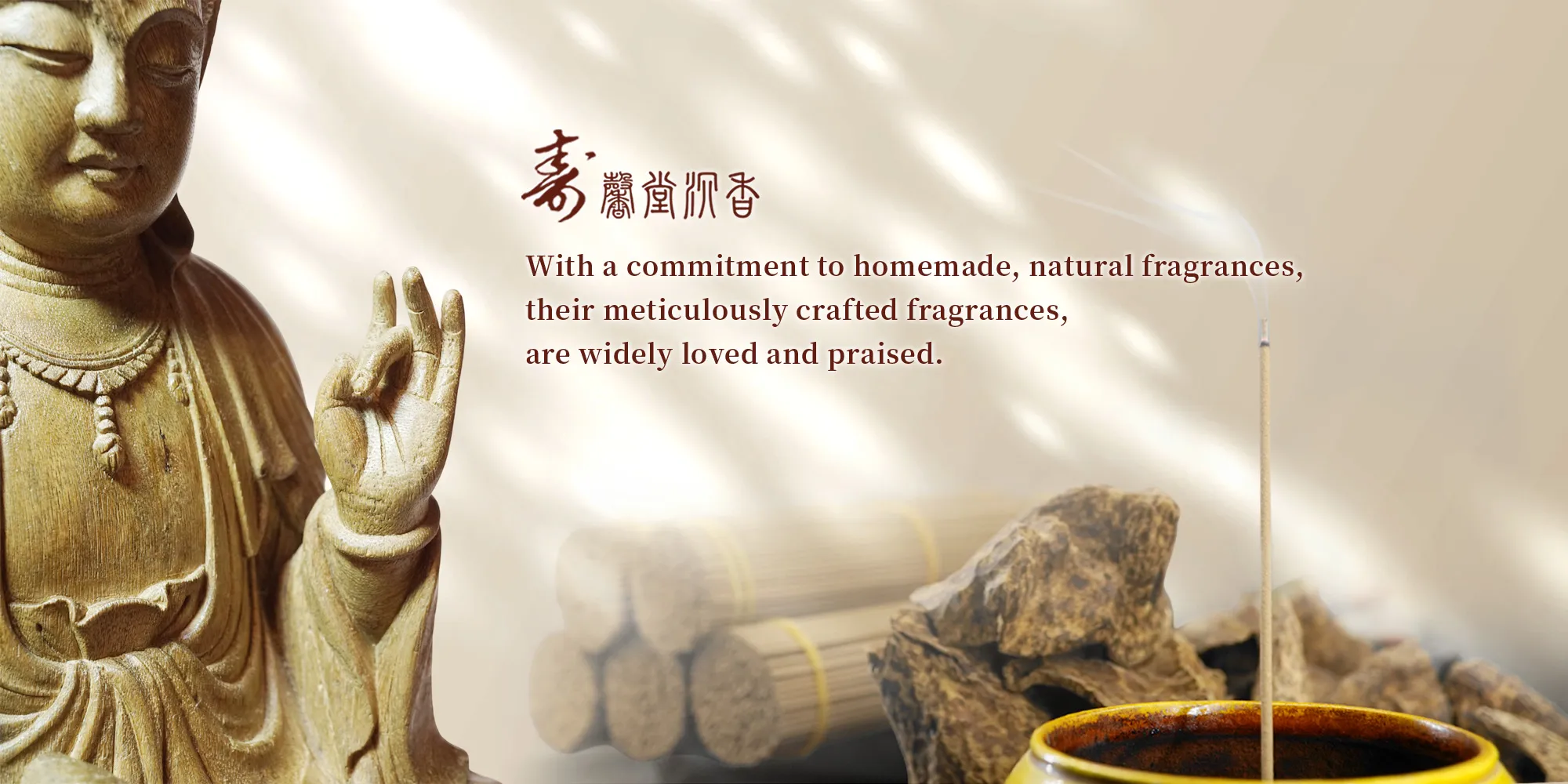
About Shouxintang
Shouxintang adheres to the principle of "making natural and high-quality incense", insists on using pure raw materials and traditional methods to make each stick of incense, which carries down-to-earth and sincere feelings, and is therefore highly praised by all sectors.
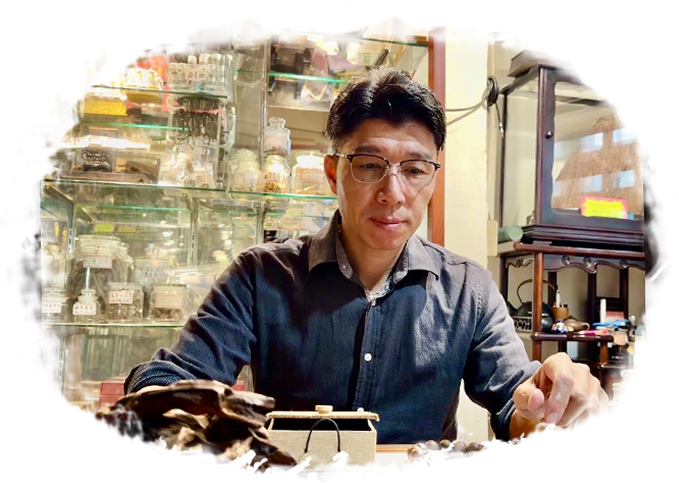
Zhuo ChunliangSecond-generation head of Shouxintang Agarwood
Cho Sheng-ChaoFounder
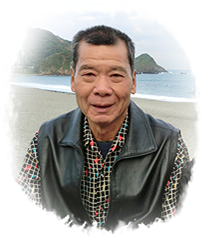
After retiring from the military in 1959, founder Mr. Cho Sheng-chao moved north from Taichung to work as an apprentice at Yonghe Incense Shop. His earliest memories are of riding a bicycle up mountains and down to the sea to deliver goods. He would leave home before dawn and return late at night, still having to prepare incense materials for the next day. Despite the hardship, he never complained. It was this spirit of not being afraid of hardship and not caring about the cost that laid the foundation for Shouxintang.
With the support of his clients and employers, he founded "Shouxintang" in Zhonghe, personally named by the master of Jinguang Buddhist Temple, thus embarking on the path of self-producing and self-selling incense. As each stick of incense is lit, its warm and elegant fragrance quietly drifts further afield.
Shouxintang incense is renowned for its natural, elegant, non-pungent, and unchanging aroma, and is widely used by various religious groups and famous temples. Its reach extends to Chengtian Temple, Shifang Dajue Temple, Chung Tai Chan Monastery, Ciyun Temple, and other locations, continuing to this day.
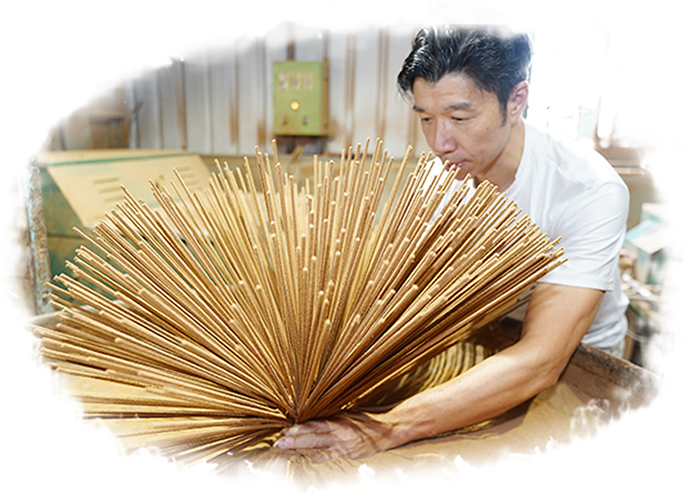
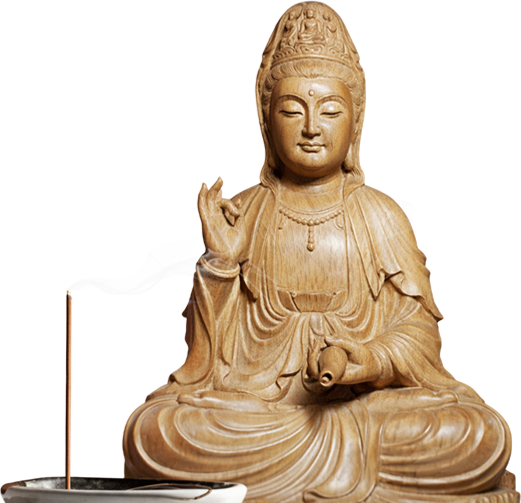
Despite environmental changes, Shouxintang remains true to its original aspiration – to make the best incense.
Inheriting ancient methods, respecting nature, and upholding the teachings of our ancestors, the belief that good incense continuously warms people's hearts has guided us all along.
The meaning of burning incense
Why does a single stick of natural incense contain all five elements (metal, wood, water, fire, and earth)?
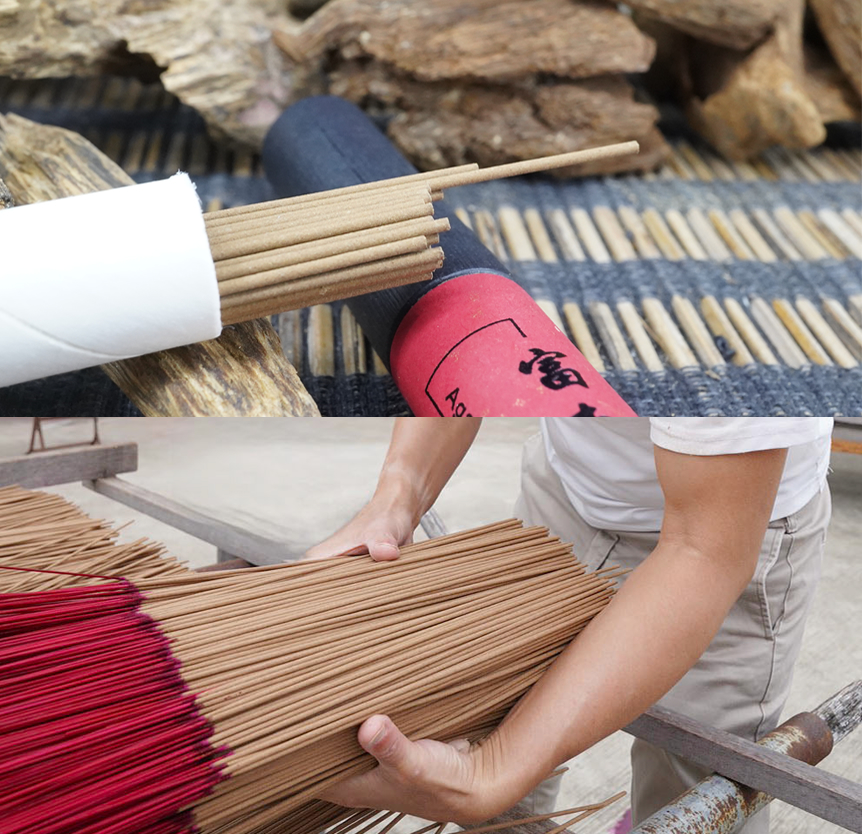
 Incense base with gold lacquer.
 Natural sandalwood powder and agarwood powder.
 Soaking in water is required for making incense.
 Lighting the incense.
 Burn the incense ash.
A person needs a balance of the five elements to be at peace; when the mind is at peace, it will not be chaotic.
Why are the feet painted red?
 The red lacquer on the base of incense sticks serves to prevent moisture and cracking, and also makes it easy to identify whether they are intended for offering incense. Some also view the red lacquer on the base as an "identification mark," symbolizing that the person offering the incense has a specific place in their heart.
This is a symbolic interpretation based on folk belief, not a definitive classical interpretation. Like a seal, it's a symbol of self-representation and respect towards deities.
 發信給店家
發信給店家 聯絡店家
聯絡店家 加入店家line好友
- Shouxintang Agarwood | Agarwood trading,Incense trading,Taipei agarwood trading,Zhonghe agarwood
- 電話 : 02-22492477 電話 : 0910308058 地址 : No. 21, Lane 31, Zhuangjing Road, Zhonghe District, New Taipei City
- 服務項目
-
特別關鍵字
Agarwood trading, Taipei agarwood trading, Zhonghe agarwood trading, agarwood ordering, Taipei agarwood ordering, Zhonghe agarwood ordering, agarwood wholesale, Taipei agarwood wholesale, Zhonghe agarwood wholesale, agarwood specialty stores, Taipei agarwood specialty stores, Zhonghe agarwood specialty stores, incense trading, Taipei incense trading, Zhonghe incense trading, incense ordering, Taipei incense ordering, Zhonghe incense ordering, incense wholesale, Taipei incense wholesale, Zhonghe incense wholesale, Incense manufacturer, Taipei incense manufacturer, Zhonghe incense manufacturer, Incense stick wholesale, Taipei incense stick wholesale, Zhonghe incense stick wholesale, Incense stick sales, Taipei incense stick sales, Zhonghe incense stick sales, Incense stick ordering, Taipei incense stick ordering, Zhonghe incense stick ordering, Upright incense wholesale, Taipei upright incense wholesale, Zhonghe upright incense wholesale, Upright incense sales, Taipei upright incense sales, Zhonghe upright incense sales, Upright incense ordering, Taipei upright incense ordering, Zhonghe upright incense ordering, Horizontal incense wholesale, Taipei horizontal incense wholesale, Zhonghe horizontal incense wholesale, Horizontal incense sales, Taipei horizontal incense sales, Zhonghe horizontal incense sales, Horizontal incense ordering, Taipei horizontal incense ordering, Zhonghe horizontal incense ordering, Gongxiang wholesale, Taipei Gongxiang wholesale, Zhonghe Gongxiang wholesale, Gongxiang sales, Taipei Gongxiang sales, Zhonghe Gongxiang sales, Gongxiang ordering, Taipei Gongxiang ordering, Zhonghe Gongxiang ordering, Wholesale incense coils, wholesale incense coils in Taipei, wholesale incense coils in Zhonghe District, selling incense coils, selling incense coils in Taipei, selling incense coils in Zhonghe District, ordering incense coils in Taipei, ordering incense coils in Zhonghe District, incense factory, incense factory in Taipei, incense factory in Zhonghe District, incense factory in Taipei, incense factory in Zhonghe District, handmade incense sticks, handmade incense sticks in Taipei, handmade incense sticks in Zhonghe District, handmade standing incense, handmade standing incense in Taipei, handmade standing incense in Zhonghe District, handmade lying incense, handmade incense making in Taipei, handmade incense making in Zhonghe District, natural incense sticks, natural incense sticks in Taipei, natural incense sticks in Zhonghe District, natural standing incense sticks in Taipei, natural standing incense sticks in Zhonghe District, Natural incense sticks, Taipei natural incense sticks, Zhonghe natural incense sticks, natural coil incense, Taipei natural coil incense, Zhonghe natural coil incense, natural incense powder, Taipei natural incense powder, Zhonghe natural incense powder, wild agarwood, Taipei wild agarwood, Zhonghe wild agarwood, wild agarwood for sale, Taipei wild agarwood for sale, Zhonghe wild agarwood for sale, wild agarwood order, Taipei wild agarwood order, Zhonghe wild agarwood order, Sandalwood incense sticks, Taipei sandalwood incense sticks, Zhonghe sandalwood incense sticks, sandalwood incense stick sales, Taipei sandalwood incense stick sales, Zhonghe sandalwood incense stick sales, sandalwood incense stick ordering, Taipei sandalwood incense stick ordering, Zhonghe sandalwood incense stick ordering, low-smoke incense sticks, Taipei low-smoke incense sticks, Zhonghe low-smoke incense stick sales, low-smoke incense stick sales, Taipei low-smoke incense stick ordering, Zhonghe low-smoke incense stick ordering, Taipei low-smoke incense stick ordering, Zhonghe low-smoke incense stick ordering, Huian agarwood, Taipei Huian agarwood, Zhonghe Huian agarwood, Huian agarwood sales, Taipei Huian agarwood sales, Zhonghe Huian agarwood sales, Huian agarwood ordering, Taipei Huian agarwood ordering, Zhonghe Huian agarwood ordering, Nha Trang agarwood, Taipei Nha Trang agarwood, Zhonghe Nha Trang agarwood, Nha Trang agarwood sales, Taipei Nha Trang agarwood sales, Zhonghe Nha Trang agarwood sales, Nha Trang agarwood ordering, Taipei Nha Trang agarwood ordering, Zhonghe Nha Trang agarwood ordering, Hue agarwood, Taipei Hue agarwood, Zhonghe Hue agarwood, Hue agarwood for sale, Taipei Hue agarwood for sale, Zhonghe Hue agarwood for sale, Hue agarwood order, Taipei Hue agarwood order, Zhonghe Hue agarwood order, Phu Son red soil agarwood, Taipei Phu Son red soil agarwood, Zhonghe Phu Son red soil agarwood, Buying and selling Fusen red soil agarwood, buying and selling Fusen red soil agarwood in Taipei, buying and selling Fusen red soil agarwood in Zhonghe, ordering Fusen red soil agarwood, ordering Fusen red soil agarwood in Taipei, ordering Fusen red soil agarwood in Zhonghe, ordering Kaliwandan agarwood, Kaliwandan agarwood in Taipei, Kaliwandan agarwood in Zhonghe, Kalimantan agarwood trading, Kalimantan agarwood trading in Taipei, Kalimantan agarwood trading in Zhonghe, Kalimantan agarwood ordering, Kalimantan agarwood ordering in Taipei, Kalimantan agarwood ordering in Zhonghe, Indonesian Tarakan agarwood, Indonesian Tarakan agarwood trading, Indonesian Tarakan agarwood trading, Taipei, Indonesian Tarakan agarwood trading, Zhonghe, Indonesian Tarakan agarwood trading, Ordering Indonesian Tarakan agarwood, ordering Indonesian Tarakan agarwood in Taipei, ordering Indonesian Tarakan agarwood in Zhonghe, incense ceremony supplies, incense ceremony supplies in Taipei, incense ceremony supplies in Zhonghe, buying and selling incense ceremony supplies, buying and selling incense ceremony supplies in Taipei, buying and selling incense ceremony supplies in Zhonghe, ordering incense ceremony supplies, ordering incense ceremony supplies in Taipei, ordering incense ceremony supplies in Zhonghe, Aromatherapy products, Taipei aromatherapy products, Zhonghe aromatherapy products, aromatherapy product sales, Taipei aromatherapy product sales, Zhonghe aromatherapy product sales, aromatherapy product ordering, Taipei aromatherapy product ordering, Zhonghe aromatherapy product ordering, agarwood incense sticks, Taipei agarwood incense sticks, Zhonghe agarwood incense sticks, Agarwood powder, Taipei agarwood powder, Zhonghe agarwood powder, agarwood necklace, Taipei agarwood necklace, Zhonghe agarwood necklace, agarwood pendant, Taipei agarwood pendant, Zhonghe agarwood pendant, agarwood prayer beads, Taipei agarwood prayer beads, Zhonghe agarwood prayer beads, agarwood essential oil, Taipei agarwood essential oil, Zhonghe agarwood essential oil, Agarwood chips for sale, Taipei agarwood chips for sale, Zhonghe agarwood chips for sale, sandalwood specialty store, Taipei sandalwood specialty store, Zhonghe sandalwood specialty store, sandalwood wholesale, Taipei sandalwood wholesale, Zhonghe sandalwood wholesale, sandalwood incense, Taipei sandalwood incense, Zhonghe sandalwood incense, sandalwood powder, Taipei sandalwood powder, Zhonghe sandalwood powder, Sandalwood carving, Taipei sandalwood carving, Zhonghe sandalwood carving, sandalwood prayer beads, Taipei sandalwood prayer beads, Zhonghe sandalwood prayer beads, sandalwood essential oil, Taipei sandalwood essential oil, Zhonghe sandalwood essential oil, wholesale sandalwood powder, wholesale Taipei sandalwood powder, wholesale Zhonghe sandalwood powder, order sandalwood, order Taipei sandalwood, order Zhonghe sandalwood, Incense tower ordering, Taipei incense tower ordering, Zhonghe incense tower ordering, incense tower wholesale, Taipei incense tower wholesale, Zhonghe incense tower wholesale, incense ring sales, Taipei incense ring sales, Zhonghe incense ring sales, incense ring wholesale, Taipei incense ring wholesale, Zhonghe incense ring wholesale, incense powder wholesale, Taipei incense powder wholesale, Zhonghe incense powder wholesale, Wholesale Buddhist prayer beads, wholesale Buddhist prayer beads in Taipei, wholesale Buddhist prayer beads in Zhonghe, Buddhist prayer beads for bracelets, Buddhist prayer beads for bracelets in Taipei, Buddhist prayer beads for bracelets in Zhonghe, Buddhist supplies, Buddhist supplies for sale in Taipei, Buddhist supplies for sale in Zhonghe, Buddhist supplies for order, Buddhist supplies for order in Taipei, Buddhist supplies for order in Zhonghe, Buddhist statue carving, Taipei Buddhist statue carving, Zhonghe Buddhist statue carving, carved ornaments, Taipei carved ornaments, Zhonghe carved ornaments, white agarwood trading, Taipei white agarwood trading, Zhonghe white agarwood trading, Japanese-style incense ash burners, Taipei Japanese-style incense ash burners, Zhonghe Japanese-style incense ash burners, Electronic incense burner, Taipei electronic incense burner, Zhonghe electronic incense burner, smokeless charcoal, Taipei smokeless charcoal, Zhonghe smokeless charcoal, silver leaf, Taipei silver leaf, Zhonghe silver leaf