A fragrance enthusiast asked:
There are many cheap Qinan and other agarwood on the market... why are there Qinan and other agarwood costing tens of thousands of yuan per gram?
Currently, agarwood and Qinan are roughly divided into: wild and cultivated.
Wild agarwood or Qinan must come from a specific tree species in the Thymelaeaceae family of the Aquilaria genus
to meet the criteria of "good" in the Compendium of Materia Medica.
However, nature's fermentation process requires a long time (hundreds to thousands of years),
and many coincidences, and after being buried in the soil and coexisting,
it can reveal the incomparably precious agarwood to the world.
Cultivated agarwood
In the early days, yeast was mostly planted on agarwood trees, causing the trees to become diseased and produce resin.
However, the resin produced is more... The agarwood was too yellow, not black enough, and of poor quality, leading to a poor market response.
Further technical research revealed that a more aggressive method could produce a darker, more abundant resin.
The raw, mid-grade fragrance (note 1) surpasses that of wild agarwood.
After slight processing, most of it can sink in water.
This led to a booming market and a peak in agarwood cultivation!
It takes about 3-5 years for agarwood to form resin.
Most agarwood shops sell this type of agricultural product:
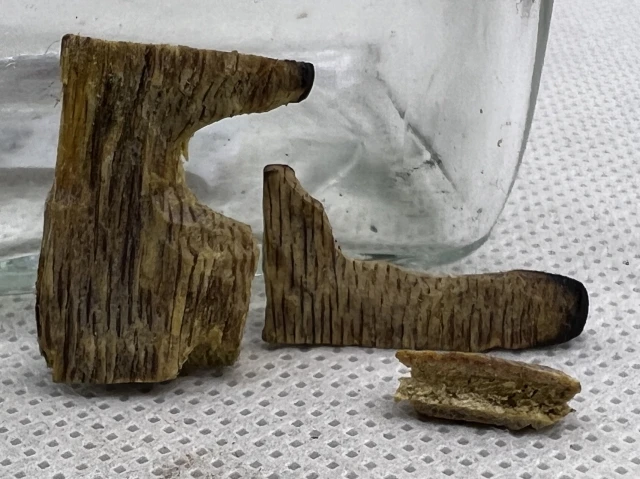
agarwood prayer beads and agarwood bracelets. Agarwood carving, incense, and incense-making materials <<
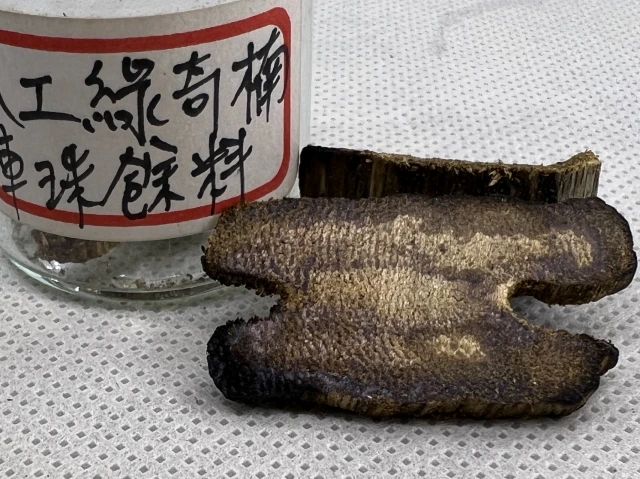
Artificial Qinan,
artificial white Qinan (Huizhou Qinan),
artificial green Qinan, already used as scraps for making prayer beads.
Utilizing the only remaining Qinan mother trees auctioned internationally, agarwood trees are grafted onto branches,
allowing the agarwood tree to be infected.
This results in the production of oils with a similar aroma to the mother tree.
First generation, second, third, fourth... and so on, in batches.
It's not surprising that Qinan is everywhere... So ,
just like before, Qinan prayer beads, Qinan bracelets, Qinan carvings, incense, and incense-making materials are mostly of this type.
Is artificial Qinan good or bad?
There are proponents for both, but artificial Qinan
is cheaper, has a higher oil content, stronger raw and mid-scent aromas, and a wider variety of products, making it superior to wild Qinan.
However, there are many more aspects of wild Qinan that agarwood enthusiasts haven't yet explored beyond its fragrance...
No wonder many veteran collectors are so fond of wild Qinan agarwood.
Note 1: Raw Scent: Directly smelling the surface of the agarwood.
Top, Middle, and Distant Scents: Refers to the different fragrance changes that occur when burning incense, as the agarwood oils differentiate through air


 MENU
MENU

 發信給店家
發信給店家 聯絡店家
聯絡店家 加入店家line好友