


 MENU
MENU
NEWS

Which is better, black agarwood or water-sinking agarwood?
Agarwood has gradually become more widely known through media and public information exchange, leading many new agarwood enthusiasts to want to get involved.
A fellow enthusiast asked me, " Which is better, black agarwood or water-sinking agarwood?
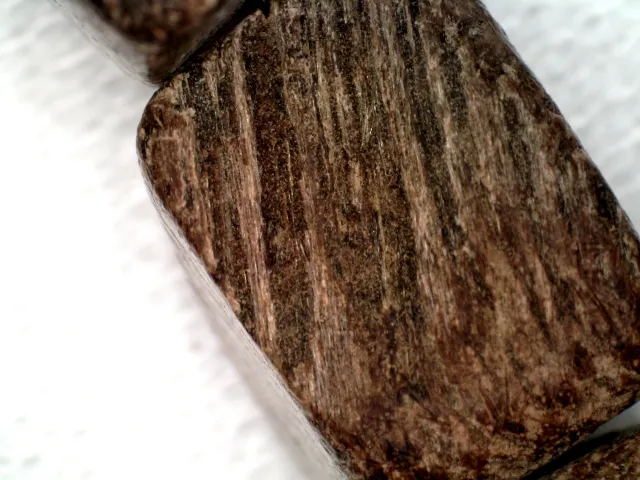
" Black agarwood generally refers to agarwood with a dark appearance.
However, there's an increasing amount of counterfeit and technologically produced agarwood these days, often with a black appearance and even sinking quickly in water!
(Search "fake agarwood beads" online for related information.) Therefore, I always specify the country of origin and distribution center when selling agarwood,
making it easy for new buyers to distinguish genuine from fake. Just like tea leaves—you can tell from the tea leaves which region in Taiwan it comes from, whether it's machine-picked or hand-picked, and how it's roasted—
experienced tea drinkers can immediately tell just by tasting and looking at it. The same applies to agarwood... However, inexperienced newcomers to agarwood
can easily fall into the traps of unscrupulous sellers without realizing it. "
Water-sinking " generally refers to agarwood whose oil content is higher than water's density, causing it to sink rapidly. It can also refer to "carbonized driftwood in water, unrelated to agarwood"!
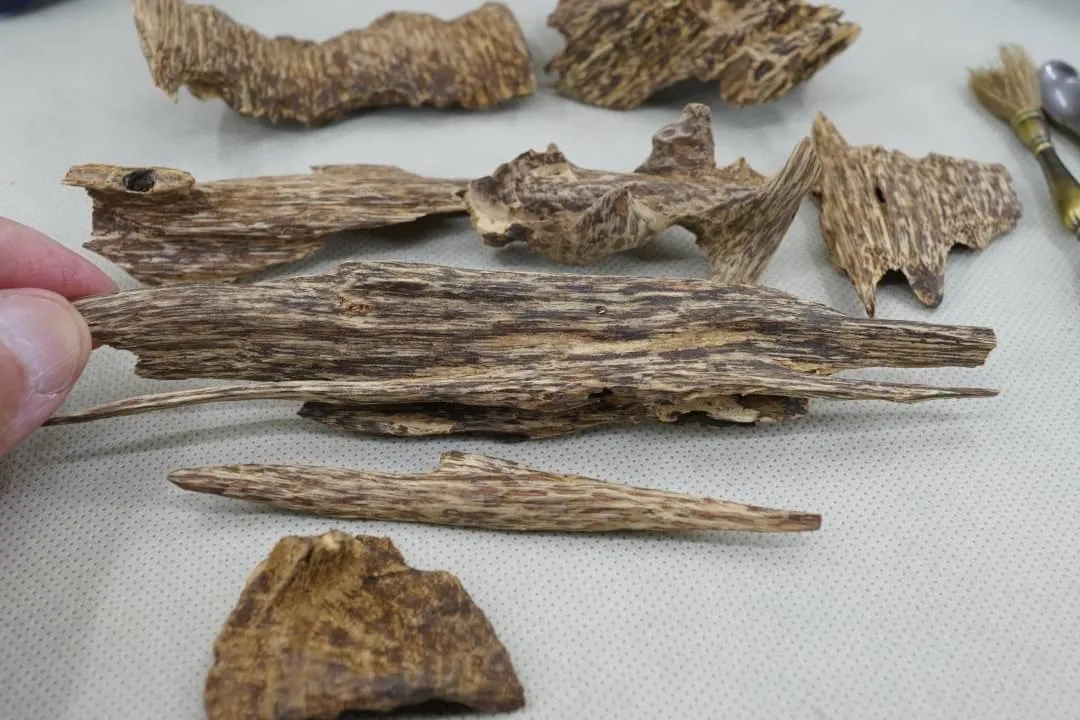
Natural agarwood can be damaged by insects, animal punctures, scratches, lightning strikes, knife/axe cuts, ant holes, etc., causing the agarwood to secrete oil to cover the wounds.
The age of the agarwood tree, the location of the injury, and the amount of oil secreted all influence the future development of that piece of agarwood, which I will not elaborate on further.
In today's technologically advanced world, it's easy to make wood submerge in water... except for methods like lead impregnation, wax impregnation, injecting agarwood oil into the wood's capillaries, using carbonized coral wood, and
boiling agarwood oil to infuse it into the pores... There's also dense agarwood, non-Thymelaeaceae agarwood... and so on, the list goes on.
So it's no surprise that the streets are full of water-grown agarwood and the market is full of Qinan (a type of agarwood)...
"Think about it calmly, why is agarwood listed in the Washington Convention for protection???"
In conclusion: I hope all agarwood enthusiasts can find genuine agarwood appropriately,
experience its delicate fragrance from afar, and savor its comfort, peace, and expansiveness. Black agarwood and water-grown agarwood...
as long as it's natural, it's fine~~ ^^
A fellow enthusiast asked me, " Which is better, black agarwood or water-sinking agarwood?
" Black agarwood generally refers to agarwood with a dark appearance.
However, there's an increasing amount of counterfeit and technologically produced agarwood these days, often with a black appearance and even sinking quickly in water!
(Search "fake agarwood beads" online for related information.) Therefore, I always specify the country of origin and distribution center when selling agarwood,
making it easy for new buyers to distinguish genuine from fake. Just like tea leaves—you can tell from the tea leaves which region in Taiwan it comes from, whether it's machine-picked or hand-picked, and how it's roasted—
experienced tea drinkers can immediately tell just by tasting and looking at it. The same applies to agarwood... However, inexperienced newcomers to agarwood
can easily fall into the traps of unscrupulous sellers without realizing it. "
Water-sinking " generally refers to agarwood whose oil content is higher than water's density, causing it to sink rapidly. It can also refer to "carbonized driftwood in water, unrelated to agarwood"!
Natural agarwood can be damaged by insects, animal punctures, scratches, lightning strikes, knife/axe cuts, ant holes, etc., causing the agarwood to secrete oil to cover the wounds.
The age of the agarwood tree, the location of the injury, and the amount of oil secreted all influence the future development of that piece of agarwood, which I will not elaborate on further.
In today's technologically advanced world, it's easy to make wood submerge in water... except for methods like lead impregnation, wax impregnation, injecting agarwood oil into the wood's capillaries, using carbonized coral wood, and
boiling agarwood oil to infuse it into the pores... There's also dense agarwood, non-Thymelaeaceae agarwood... and so on, the list goes on.
So it's no surprise that the streets are full of water-grown agarwood and the market is full of Qinan (a type of agarwood)...
"Think about it calmly, why is agarwood listed in the Washington Convention for protection???"
In conclusion: I hope all agarwood enthusiasts can find genuine agarwood appropriately,
experience its delicate fragrance from afar, and savor its comfort, peace, and expansiveness. Black agarwood and water-grown agarwood...
as long as it's natural, it's fine~~ ^^
相關文章
 發信給店家
發信給店家 聯絡店家
聯絡店家 加入店家line好友