


 MENU
MENU
NEWS

The use and trade of agarwood and the Warsaw Pact's management of agarwood trees in Rongshui.
The Use, Trade, and Warsaw Pact Management of Aquilaria malaccensis Trees The following article is excerpted from a research report by the East Asian Wildlife Trade Research Committee: ===
Aquilaria, a resinous, fragrant, and expensive wood, is derived from the wood of the Aquilaria malaccensis tree or other Aquilaria species found in Southeast Asia.
This dark and heavy wood has many names, demonstrating its widespread use in various regions for thousands of years.
Records of its medicinal use exist in 8th-century Islamic and Indian traditional medicine. The Old Testament mentions aquilaria being used to make perfume. These uses continue to this day. Aquilaria is used in Indian, Tibetan, and East Asian traditional medicine. Due to its strong fragrance, aquilaria is also processed into essential oils and spices, particularly popular in the Middle East. Agarwood is also used in Buddhist, Hindu, and Islamic rituals, and the resurgence of incense appreciation has reignited the Japanese interest in it.
In Taiwan, agarwood is added during the production of Wujiapi wine and Zhuyeqing wine to enhance their aroma. Another, though less common, use is carving agarwood into sculptures, beads, and boxes, sometimes used in religious ceremonies. International trade in agarwood dates back to the 13th century, with India being one of the earliest exporters. The international trade volume of agarwood is now substantial; in 1997, over 700 tons of agarwood were sourced from the Rongshui agarwood tree. Among the more than twenty countries that export or re-export agarwood, Indonesia and Malaysia are the largest exporters. While agarwood constitutes only a small portion of the overall timber trade
by volume, its monetary value is undeniable. Demand for agarwood has reached a point where supply cannot meet demand. This is because only a portion of the Aquilaria species produce agarwood resin. Although the formation of agarwood resin is still under investigation, this fragrant resin is stored in the heartwood of certain Aquilaria plants and is secreted in large quantities after fungal infection. Agarwood is a type of wood rich in resin. However, it's difficult to identify whether agarwood contains resin from the plant's appearance. To find resin-containing wood, the trunk must be cut down to locate the individual trees containing agarwood resin, leading to the extensive logging of agarwood trees.
On the other hand, agarwood without resin is too soft to be used as building material, limiting its applications. The high price of agarwood has also led to illegal logging and trade in several agarwood-producing countries. Currently, eight populations of the genus *Aquilaria* are listed as "threatened" in the IUCN Red List of Threatened Species. Among them, the population crisis of six species is caused by overharvesting of agarwood.
Agarwood (Aquilaria sinensis) was listed in Annex II of the Convention on International Trade in Endangered Species of Wild Fauna and Flora (CITES) in February 1995. Following its inclusion in Annex II, all Warsaw Pact member states must issue Warsaw Pact permits for the export or re-export of any part of the Aquilaria sinensis plant or its derivatives (e.g., timber, chips, oil). The convention stipulates that when goods are exported from the country of origin, the exporting government must first verify the legality of the agarwood's origin and that it will not affect the survival of the species before issuing an export permit. International trade in agarwood takes the form of timber, chips, powder, oil, and even finished products such as perfumes, incense, or medicines. The quality grading of agarwood is not related to its species, but rather to factors such as size, resin content, aroma, and color. For agarwood oil, the quality is determined by its purity. Origin is also a crucial factor in determining agarwood prices.
Limited trade records show that Indonesia and Malaysia hold significant positions in the international agarwood trade. Between 1995 and 1997, Indonesia exported 920 tons of Rongshui agarwood trees. During the same period, 340 tons of Rongshui agarwood trees were exported from the Malay Peninsula. In 1998 alone, nearly 530 tons of Rongshui agarwood trees were exported from Sarawak in East Malaysia. Agarwood exported from Malaysia and Indonesia may contain other Aquilaria species. Vietnam is also a source of agarwood. According to data from Taiwan Customs, Taiwan imported over 500 tons of agarwood from Vietnam between 1993 and 1998. Vietnam is not the origin of the Rongshui agarwood tree; therefore, the agarwood produced in Vietnam belongs to other species of the Aquilaria genus.
Between 1993 and 1998, Taiwan imported over 300 tons of agarwood each from Cambodia and Thailand; however, only Thailand is the natural distribution area of the Rongshui agarwood tree. The roles played by Laos and Myanmar in the agarwood trade require further research to determine. Most agarwood on the international trade market is exported to the Far East and Middle East. From 1995 to 1997, the main destinations were Saudi Arabia, the United Arab Emirates, Hong Kong, and Taiwan. In reality, most consuming regions did not report their import volumes of agarwood to the Warsaw Pact Secretariat, resulting in virtually no import data available for reference. Singapore plays a significant role in the agarwood trade, importing agarwood from South and Southeast Asia, with most of it being re-exported, some of which is already processed, such as agarwood oil. From 1995 to 1997, Singapore re-exported nearly 800 tons of agarwood, accounting for 70% of the total exports from Indonesia and the Malay Peninsula to Singapore (1,113 tons).
India, once a major international market for agarwood, has seen its natural reserves drastically reduced due to overharvesting and has now become an agarwood processing center, using agarwood that is not native to India. Illegal harvesting and trade have weakened the management of agarwood species. Reports of illegal agarwood harvesting have surfaced in India, Indonesia, Laos, Malaysia, Myanmar, Papua New Guinea, and Vietnam. Indonesia has also experienced incidents of agarwood poaching within protected areas, while India has seen poaching in government-run agarwood plantations. With agarwood supply steadily declining, several countries, including India, Indonesia, and Vietnam, have begun cultivating Aquilaria species to meet continued demand. Indonesia and Vietnam have also implemented programs to stimulate resin production in these plants. However, production is typically insufficient to meet demand. Currently, experimental programs in India to cultivate Aquilaria sinensis and in Vietnam to cultivate other Aquilaria species have been successful. As mentioned above, six species of Aquilaria are currently threatened by overexploitation.
Unless further action is taken to monitor the harvesting and trade of agarwood, wild populations of *Aquilaria sinensis* and other Aquilaria species show signs of continued decline. The negative impacts of population decline extend beyond biodiversity loss to include the depletion of valuable forest resources. Taking action to reduce overharvesting and illegal trade is urgent. A better understanding of the biological characteristics and current status of agarwood species is also necessary, especially in countries that export large quantities of agarwood. A deeper understanding of the profit flows in agarwood harvesting and trade is also needed to encourage more effective harvesting and trade management. Authorities must implement effective harvesting and trade controls, including strengthening the implementation of the Warsaw Pact and providing better tools for agarwood species identification. Of particular concern is whether agarwood harvesting in Indonesia and Malaysia harms wild populations, and the need to develop methods for identifying species of *Aquilaria sinensis*. Other *Aquilaria* species are also threatened by overharvesting, and consideration should be given to including these species, or the entire *Aquilaria* genus, in the Warsaw Pact appendices. Research projects aimed at increasing agarwood production artificially should also be incorporated into the sustainable management plans for these species.
Furthermore, it is necessary to establish cooperative relationships with industries related to agarwood conservation, harvesting, and trade. Successful implementation of this will ensure the future of *Aquilaria* species and the supply of agarwood. Holding symposia to facilitate the exchange of ideas among relevant industries would be a first step in promoting such cooperation.
This article is excerpted from a research report by the East Asian Wildlife Trade Research Council. The full English version can be downloaded from the website (http://www.traffic.org/dispatche ... y2000/agarwood.html).
Overharvesting and Illegal Trade Threaten the Future of Agarwood. The unique aromas of Shuanglu Wujiapi Wine and Zhuyeqing Wine, produced by the Taiwan Tobacco and Wine Bureau, have long been favorites among wine connoisseurs. However, many may not know that the agarwood added during the production of these two wines—this plant—is currently facing the threat of overharvesting and illegal trade globally. Agarwood, an aromatic wood, is derived from plants of the genus *Aquilaria*, which are facing extinction due to overharvesting and illegal trade. In its "Agarwood Trade Report," published globally today, TRAFFIC urges countries that export and use agarwood to protect this plant resource with high cultural and economic value and to immediately begin management, trade control, and research on agarwood.
Agarwood is a valuable wood commonly used in medicine, perfumes, and spices. It has been used medicinally for thousands of years in traditional Indian, Tibetan, and East Asian medicine. Agarwood perfume is made by mixing agarwood oil with other solvents (such as sandalwood oil); agarwood essence is also increasingly used in soaps and shampoos. Agarwood incense and agarwood oil are commonly used aromatics in the Middle East.
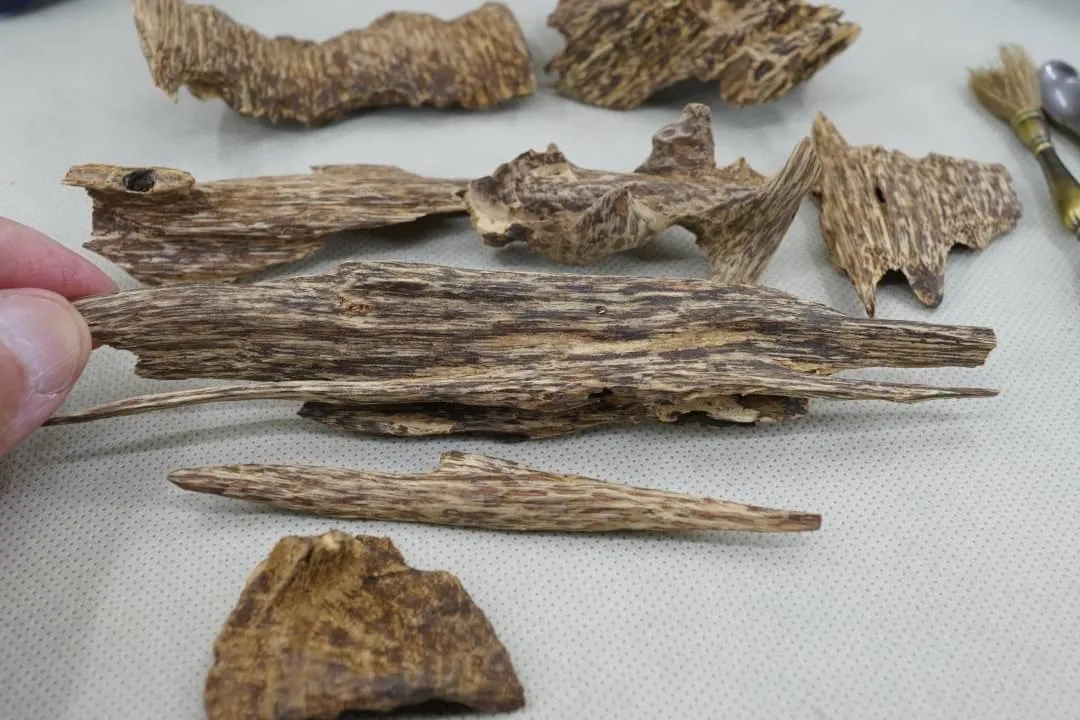
Taiwan is one of the world's largest consumers of agarwood. In Taiwan, the use of agarwood is widespread. For example, it is often used in traditional Chinese medicine as a qi-regulating herb; and due to Taiwan's prevalent religious beliefs, agarwood is used as a raw material for expensive incense used in daily worship; the Taiwan Tobacco and Liquor Corporation also uses agarwood to enhance the aroma of its Shuanglu Wujiapi wine and Zhuyeqing wine. Due to its high price and elegant fragrance, agarwood has been a prized possession of Chinese collectors since ancient times, much like jade, in addition to its consumable uses. In Taiwan, agarwood is also collected in the form of wood blocks or carved items. There are even shops in Taiwan specializing in agarwood products, such as agarwood logs, blocks, carvings, various types of incense, agarwood powder, and agarwood oil.
With the prevalence of traditional Chinese medicine and active religious activities in Taiwan, an average of 680 tons of agarwood are consumed annually. According to CITES and Taiwan Customs data, Taiwan is one of the world's largest consumers of agarwood. The supply is gradually decreasing. According to this TRAFFIC agarwood report, in 1997, more than 700 tons of agarwood were produced from the Aquilaria malaccensis tree alone in international trade, with Indonesia and Malaysia being the main exporting countries. From 1995 to 1997, Indonesia exported 920 tons of agarwood. During the same period, the Malay Peninsula also exported 340 tons. This does not include agarwood exported from Sarawak, which exported nearly 530 tons of agarwood in 1998 alone. Chen Yang-wen, senior project director of the Taipei Wildlife Trade Research Committee, stated,
"While the trade volume of agarwood accounts for only a small portion compared to other mainstream timber trade volumes, its importance is highlighted when calculated in monetary terms." Director Chen explained, "Agarwood chips or blocks can fetch several thousand US dollars per kilogram, while distilled agarwood oil can range from five thousand to ten thousand US dollars per kilogram. Higher quality agarwood oil can command even higher prices." However, this demand is threatened by overharvesting and a rapid contraction in supply. Mr. Sung Kuo-chang of the Taipei Wildlife Trade Research Committee, who participated in the report, explained: "Agarwood resin is secreted by Aquilaria trees when they are injured or when their heartwood is infected by fungi. Only a small percentage of individuals secrete agarwood resin, and its presence cannot be discerned from appearance. This has led to the large-scale felling of all agarwood trees in search of individuals containing agarwood resin. This practice severely impacts the survival of agarwood populations." The high price of agarwood has also spurred illegal harvesting and trade in many countries. For example, agarwood in Indonesian protected areas has been illegally harvested; in India, there have been cases of illegal harvesting in government-run agarwood plantations; and there have been reports of illegal harvesting and trade in agarwood in Laos, Malaysia, Myanmar, Papua New Guinea, and Vietnam.
The lack of information means that eight populations of the Aquilaria genus are currently listed as "threatened" in the IUCN Red List Categories, with six of these species facing population crises due to overharvesting. In 1995, Aquilaria yunnanensis was listed in Appendix II of the Convention on International Trade in Endangered Species of Wild Fauna and Flora (CITES). However, this level of protection faces numerous challenges. Song Guozhang further explained, "Under CITES regulations, exporting countries can only issue export permits if they are certain that the source of agarwood is legal and will not harm the survival of the species. However, there is currently not much data on the species' condition in the wild, making it impossible for these governments to determine whether exported agarwood will affect the principle of sustainable use." He also mentioned that efforts to implement CITES have been hampered by the difficulties in species identification. "Identifying agarwood species with the naked eye is very difficult and far beyond the capabilities of most law enforcement personnel. Currently, it is also impossible to identify the species of a product without laboratory equipment. Therefore, law enforcement agencies often cannot distinguish whether the agarwood traded is from the CITES-regulated *Aquilaria sinensis* tree." Given that Taiwan is one of the world's largest consumers of agarwood, and since Taiwan invoked the Trade Act in 1998 to regulate CITES plant species, TRAFFIC Taipei, in releasing this report, urged importers engaged in agarwood trade to comply with relevant laws and regulations, importing legally sourced agarwood products to avoid illegality and to prevent the illegal trade of agarwood.
Aquilaria, a resinous, fragrant, and expensive wood, is derived from the wood of the Aquilaria malaccensis tree or other Aquilaria species found in Southeast Asia.
This dark and heavy wood has many names, demonstrating its widespread use in various regions for thousands of years.
Records of its medicinal use exist in 8th-century Islamic and Indian traditional medicine. The Old Testament mentions aquilaria being used to make perfume. These uses continue to this day. Aquilaria is used in Indian, Tibetan, and East Asian traditional medicine. Due to its strong fragrance, aquilaria is also processed into essential oils and spices, particularly popular in the Middle East. Agarwood is also used in Buddhist, Hindu, and Islamic rituals, and the resurgence of incense appreciation has reignited the Japanese interest in it.
In Taiwan, agarwood is added during the production of Wujiapi wine and Zhuyeqing wine to enhance their aroma. Another, though less common, use is carving agarwood into sculptures, beads, and boxes, sometimes used in religious ceremonies. International trade in agarwood dates back to the 13th century, with India being one of the earliest exporters. The international trade volume of agarwood is now substantial; in 1997, over 700 tons of agarwood were sourced from the Rongshui agarwood tree. Among the more than twenty countries that export or re-export agarwood, Indonesia and Malaysia are the largest exporters. While agarwood constitutes only a small portion of the overall timber trade
by volume, its monetary value is undeniable. Demand for agarwood has reached a point where supply cannot meet demand. This is because only a portion of the Aquilaria species produce agarwood resin. Although the formation of agarwood resin is still under investigation, this fragrant resin is stored in the heartwood of certain Aquilaria plants and is secreted in large quantities after fungal infection. Agarwood is a type of wood rich in resin. However, it's difficult to identify whether agarwood contains resin from the plant's appearance. To find resin-containing wood, the trunk must be cut down to locate the individual trees containing agarwood resin, leading to the extensive logging of agarwood trees.
On the other hand, agarwood without resin is too soft to be used as building material, limiting its applications. The high price of agarwood has also led to illegal logging and trade in several agarwood-producing countries. Currently, eight populations of the genus *Aquilaria* are listed as "threatened" in the IUCN Red List of Threatened Species. Among them, the population crisis of six species is caused by overharvesting of agarwood.
Agarwood (Aquilaria sinensis) was listed in Annex II of the Convention on International Trade in Endangered Species of Wild Fauna and Flora (CITES) in February 1995. Following its inclusion in Annex II, all Warsaw Pact member states must issue Warsaw Pact permits for the export or re-export of any part of the Aquilaria sinensis plant or its derivatives (e.g., timber, chips, oil). The convention stipulates that when goods are exported from the country of origin, the exporting government must first verify the legality of the agarwood's origin and that it will not affect the survival of the species before issuing an export permit. International trade in agarwood takes the form of timber, chips, powder, oil, and even finished products such as perfumes, incense, or medicines. The quality grading of agarwood is not related to its species, but rather to factors such as size, resin content, aroma, and color. For agarwood oil, the quality is determined by its purity. Origin is also a crucial factor in determining agarwood prices.
Limited trade records show that Indonesia and Malaysia hold significant positions in the international agarwood trade. Between 1995 and 1997, Indonesia exported 920 tons of Rongshui agarwood trees. During the same period, 340 tons of Rongshui agarwood trees were exported from the Malay Peninsula. In 1998 alone, nearly 530 tons of Rongshui agarwood trees were exported from Sarawak in East Malaysia. Agarwood exported from Malaysia and Indonesia may contain other Aquilaria species. Vietnam is also a source of agarwood. According to data from Taiwan Customs, Taiwan imported over 500 tons of agarwood from Vietnam between 1993 and 1998. Vietnam is not the origin of the Rongshui agarwood tree; therefore, the agarwood produced in Vietnam belongs to other species of the Aquilaria genus.
Between 1993 and 1998, Taiwan imported over 300 tons of agarwood each from Cambodia and Thailand; however, only Thailand is the natural distribution area of the Rongshui agarwood tree. The roles played by Laos and Myanmar in the agarwood trade require further research to determine. Most agarwood on the international trade market is exported to the Far East and Middle East. From 1995 to 1997, the main destinations were Saudi Arabia, the United Arab Emirates, Hong Kong, and Taiwan. In reality, most consuming regions did not report their import volumes of agarwood to the Warsaw Pact Secretariat, resulting in virtually no import data available for reference. Singapore plays a significant role in the agarwood trade, importing agarwood from South and Southeast Asia, with most of it being re-exported, some of which is already processed, such as agarwood oil. From 1995 to 1997, Singapore re-exported nearly 800 tons of agarwood, accounting for 70% of the total exports from Indonesia and the Malay Peninsula to Singapore (1,113 tons).
India, once a major international market for agarwood, has seen its natural reserves drastically reduced due to overharvesting and has now become an agarwood processing center, using agarwood that is not native to India. Illegal harvesting and trade have weakened the management of agarwood species. Reports of illegal agarwood harvesting have surfaced in India, Indonesia, Laos, Malaysia, Myanmar, Papua New Guinea, and Vietnam. Indonesia has also experienced incidents of agarwood poaching within protected areas, while India has seen poaching in government-run agarwood plantations. With agarwood supply steadily declining, several countries, including India, Indonesia, and Vietnam, have begun cultivating Aquilaria species to meet continued demand. Indonesia and Vietnam have also implemented programs to stimulate resin production in these plants. However, production is typically insufficient to meet demand. Currently, experimental programs in India to cultivate Aquilaria sinensis and in Vietnam to cultivate other Aquilaria species have been successful. As mentioned above, six species of Aquilaria are currently threatened by overexploitation.
Unless further action is taken to monitor the harvesting and trade of agarwood, wild populations of *Aquilaria sinensis* and other Aquilaria species show signs of continued decline. The negative impacts of population decline extend beyond biodiversity loss to include the depletion of valuable forest resources. Taking action to reduce overharvesting and illegal trade is urgent. A better understanding of the biological characteristics and current status of agarwood species is also necessary, especially in countries that export large quantities of agarwood. A deeper understanding of the profit flows in agarwood harvesting and trade is also needed to encourage more effective harvesting and trade management. Authorities must implement effective harvesting and trade controls, including strengthening the implementation of the Warsaw Pact and providing better tools for agarwood species identification. Of particular concern is whether agarwood harvesting in Indonesia and Malaysia harms wild populations, and the need to develop methods for identifying species of *Aquilaria sinensis*. Other *Aquilaria* species are also threatened by overharvesting, and consideration should be given to including these species, or the entire *Aquilaria* genus, in the Warsaw Pact appendices. Research projects aimed at increasing agarwood production artificially should also be incorporated into the sustainable management plans for these species.
Furthermore, it is necessary to establish cooperative relationships with industries related to agarwood conservation, harvesting, and trade. Successful implementation of this will ensure the future of *Aquilaria* species and the supply of agarwood. Holding symposia to facilitate the exchange of ideas among relevant industries would be a first step in promoting such cooperation.
This article is excerpted from a research report by the East Asian Wildlife Trade Research Council. The full English version can be downloaded from the website (http://www.traffic.org/dispatche ... y2000/agarwood.html).
Overharvesting and Illegal Trade Threaten the Future of Agarwood. The unique aromas of Shuanglu Wujiapi Wine and Zhuyeqing Wine, produced by the Taiwan Tobacco and Wine Bureau, have long been favorites among wine connoisseurs. However, many may not know that the agarwood added during the production of these two wines—this plant—is currently facing the threat of overharvesting and illegal trade globally. Agarwood, an aromatic wood, is derived from plants of the genus *Aquilaria*, which are facing extinction due to overharvesting and illegal trade. In its "Agarwood Trade Report," published globally today, TRAFFIC urges countries that export and use agarwood to protect this plant resource with high cultural and economic value and to immediately begin management, trade control, and research on agarwood.
Agarwood is a valuable wood commonly used in medicine, perfumes, and spices. It has been used medicinally for thousands of years in traditional Indian, Tibetan, and East Asian medicine. Agarwood perfume is made by mixing agarwood oil with other solvents (such as sandalwood oil); agarwood essence is also increasingly used in soaps and shampoos. Agarwood incense and agarwood oil are commonly used aromatics in the Middle East.
Taiwan is one of the world's largest consumers of agarwood. In Taiwan, the use of agarwood is widespread. For example, it is often used in traditional Chinese medicine as a qi-regulating herb; and due to Taiwan's prevalent religious beliefs, agarwood is used as a raw material for expensive incense used in daily worship; the Taiwan Tobacco and Liquor Corporation also uses agarwood to enhance the aroma of its Shuanglu Wujiapi wine and Zhuyeqing wine. Due to its high price and elegant fragrance, agarwood has been a prized possession of Chinese collectors since ancient times, much like jade, in addition to its consumable uses. In Taiwan, agarwood is also collected in the form of wood blocks or carved items. There are even shops in Taiwan specializing in agarwood products, such as agarwood logs, blocks, carvings, various types of incense, agarwood powder, and agarwood oil.
With the prevalence of traditional Chinese medicine and active religious activities in Taiwan, an average of 680 tons of agarwood are consumed annually. According to CITES and Taiwan Customs data, Taiwan is one of the world's largest consumers of agarwood. The supply is gradually decreasing. According to this TRAFFIC agarwood report, in 1997, more than 700 tons of agarwood were produced from the Aquilaria malaccensis tree alone in international trade, with Indonesia and Malaysia being the main exporting countries. From 1995 to 1997, Indonesia exported 920 tons of agarwood. During the same period, the Malay Peninsula also exported 340 tons. This does not include agarwood exported from Sarawak, which exported nearly 530 tons of agarwood in 1998 alone. Chen Yang-wen, senior project director of the Taipei Wildlife Trade Research Committee, stated,
"While the trade volume of agarwood accounts for only a small portion compared to other mainstream timber trade volumes, its importance is highlighted when calculated in monetary terms." Director Chen explained, "Agarwood chips or blocks can fetch several thousand US dollars per kilogram, while distilled agarwood oil can range from five thousand to ten thousand US dollars per kilogram. Higher quality agarwood oil can command even higher prices." However, this demand is threatened by overharvesting and a rapid contraction in supply. Mr. Sung Kuo-chang of the Taipei Wildlife Trade Research Committee, who participated in the report, explained: "Agarwood resin is secreted by Aquilaria trees when they are injured or when their heartwood is infected by fungi. Only a small percentage of individuals secrete agarwood resin, and its presence cannot be discerned from appearance. This has led to the large-scale felling of all agarwood trees in search of individuals containing agarwood resin. This practice severely impacts the survival of agarwood populations." The high price of agarwood has also spurred illegal harvesting and trade in many countries. For example, agarwood in Indonesian protected areas has been illegally harvested; in India, there have been cases of illegal harvesting in government-run agarwood plantations; and there have been reports of illegal harvesting and trade in agarwood in Laos, Malaysia, Myanmar, Papua New Guinea, and Vietnam.
The lack of information means that eight populations of the Aquilaria genus are currently listed as "threatened" in the IUCN Red List Categories, with six of these species facing population crises due to overharvesting. In 1995, Aquilaria yunnanensis was listed in Appendix II of the Convention on International Trade in Endangered Species of Wild Fauna and Flora (CITES). However, this level of protection faces numerous challenges. Song Guozhang further explained, "Under CITES regulations, exporting countries can only issue export permits if they are certain that the source of agarwood is legal and will not harm the survival of the species. However, there is currently not much data on the species' condition in the wild, making it impossible for these governments to determine whether exported agarwood will affect the principle of sustainable use." He also mentioned that efforts to implement CITES have been hampered by the difficulties in species identification. "Identifying agarwood species with the naked eye is very difficult and far beyond the capabilities of most law enforcement personnel. Currently, it is also impossible to identify the species of a product without laboratory equipment. Therefore, law enforcement agencies often cannot distinguish whether the agarwood traded is from the CITES-regulated *Aquilaria sinensis* tree." Given that Taiwan is one of the world's largest consumers of agarwood, and since Taiwan invoked the Trade Act in 1998 to regulate CITES plant species, TRAFFIC Taipei, in releasing this report, urged importers engaged in agarwood trade to comply with relevant laws and regulations, importing legally sourced agarwood products to avoid illegality and to prevent the illegal trade of agarwood.
相關文章
 發信給店家
發信給店家 聯絡店家
聯絡店家 加入店家line好友